Overview
At a glance
Is this game right for my group?
ABG editorial scores on a 1–5 scale.
Highly interactive
How it plays
How does it play?
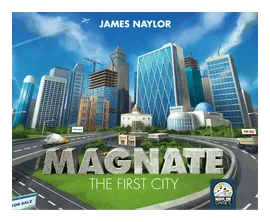
Build a city, make a fortune. “In Magnate: The First City, you’re a property developer out to build an empire in the midst of a citywide property boom.
Core mechanisms
Key systems that shape the decisions players make.
Action Points
Spend a limited allowance of points across several possible actions each turn.
Auction/Bidding
Bid against other players to determine who receives an item, action, or priority.
Dice Rolling
Roll dice to introduce uncertainty into actions, production, movement, or resolution.
Push Your Luck
Choose whether to secure current gains or risk them for a larger reward.
Modular Board
Build the play area from interchangeable sections that vary between games.
Read the full game description
Build a city, make a fortune. “In Magnate: The First City, you’re a property developer out to build an empire in the midst of a citywide property boom. By snapping-up valuable land and constructing the right buildings in the right locations, you’ll attract high value tenants and start raking in the big bucks. But beware: as the city grows, everything you build will also open up new opportunities for your competitors. Will you make a fortune? Or will you be caught out when the boom inevitably turns to bust in a game-ending market crash?” --- Magnate: The First City is a midweight strategy game for 1-5 players. Each turn players try to grow their property empire by performing different actions, including: buying plots of land, constructing buildings, marketing their developments and selling them completely for their capital value. Once per round, they will also get the chance to attract tenants to any empty buildings they have. If they are successful, they will start collecting rent from their tenants and increase the value of their holdings. At the same time, they will also create new development opportunities for themselves and their opponents. But in Magnate, as in real life, not all locations are equally appealing to all types of tenant. Magnate’s four types of tenant - residential, offices, retail and industry - all want to be linked to other types of tenant in nearby neighbourhoods. And they are all affected differently by what’s next door: The airport is an asset for offices, but it’s an unattractive place for new residents. By clever tactical and strategic building, players can increase their odds of attracting these tenants and improve their return on investment - without benefiting their opponents too much. But while the players acquire more and larger properties, the price of land keeps rising higher and higher. Eventually, it becomes completely unsustainable and a game-ending crash that will destroy the value of players’ properties becomes inevitable. When exactly the crash happens, however, is shaped by the players: How much land they buy and how much property they sell will more make a crash on any specific turn more or less likely. Players must time their actions carefully to avoid substantial losses while maximizing their profits. Only then will they emerge victorious as the city’s wealthiest property magnate. —description from the publisher