Overview
At a glance
Is this game right for my group?
ABG editorial scores on a 1–5 scale.
Harder to teach
High replayability
Highly interactive
Scales well
Deep strategy
How it plays
How does it play?
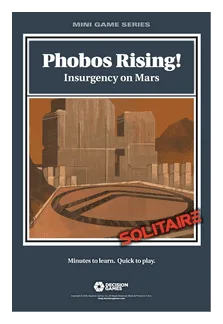
SF wargame in which a human colony ship and a robotic "DESTRUCTOR" cruiser have disabled one another in a firefight, and the player has 14 turns to infiltrate the cruiser with a crew of human soldiers and destroy either its Command Computer or all Repair robots.
Core mechanisms
Key systems that shape the decisions players make.
Area Movement
Move pieces between connected regions rather than along individual spaces.
Dice Rolling
Roll dice to introduce uncertainty into actions, production, movement, or resolution.
Hidden Movement
One or more pieces move secretly while opponents infer their locations.
Events
Triggered events alter the shared state, rules, or available choices.
Simulation
Model a real or imagined system through detailed cause-and-effect rules.
Three Dimensional Movement
Move pieces through height or depth as well as across the surface.
Read the full game description
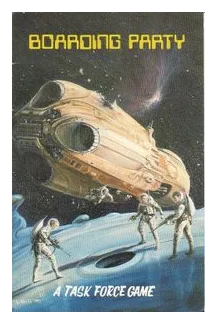
SF wargame in which a human colony ship and a robotic "DESTRUCTOR" cruiser have disabled one another in a firefight, and the player has 14 turns to infiltrate the cruiser with a crew of human soldiers and destroy either its Command Computer or all Repair robots. (If the player fails to accomplish this, the cruiser is presumed to have been successfully repaired, leading to the destruction of the colony ship.) In the solitaire version, the robots are deployed and moved semi-randomly; in the two-player version, the second player controls the robots. This is Task Force Game #1021, one of Task Force's series of microgames. The cover painting is by William H. Keith, Jr., better known as the author or co-author of over 60 military, SF, and game books.