Overview
At a glance
Is this game right for my group?
ABG editorial scores on a 1–5 scale.
Harder to teach
High replayability
Highly interactive
Scales well
Deep strategy
How it plays
How does it play?
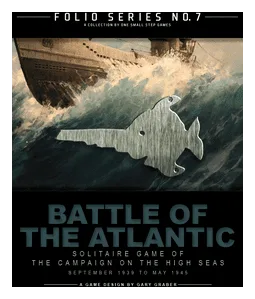
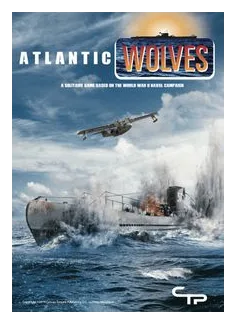
Some have called it the most crucial campaign of the Second World War. It was not fought on the ground with tanks and artillery; it was the Battle of the Atlantic, pitting the German Wolfpacks versus the allied convoy system.
Core mechanisms
Key systems that shape the decisions players make.
Area Movement
Move pieces between connected regions rather than along individual spaces.
Dice Rolling
Roll dice to introduce uncertainty into actions, production, movement, or resolution.
Events
Triggered events alter the shared state, rules, or available choices.
Simulation
Model a real or imagined system through detailed cause-and-effect rules.
Solo / Solitaire Game
Provide rules and objectives designed for a single player.
Read the full game description
Some have called it the most crucial campaign of the Second World War. It was not fought on the ground with tanks and artillery; it was the Battle of the Atlantic, pitting the German Wolfpacks versus the allied convoy system. Upon the result of the campaign hung the fate of Great Britain, and, by extension, the Allied cause in Europe. "Atlantic Wolves" is a solitaire wargame based on this important World War II naval campaign. It covers the decisive part of the campaign, August 1942 to May 1943. The player, assuming the role of Admiral Karl Doenitz, controls the German Kriegsmarine and tries to achieve success against the Allies, played by the game system. The game is a deluxe re-implementation of Gary Graber's classic wargame Battle of the Atlantic, now out of print. The map is a representation of the general locations where the Battle of the Atlantic was fought. There are seven named Areas on the board (e.g. Eastern Seaboard, Newfoundland, North Atlantic, Mid- Atlantic, Iceland, Bay of Biscay, and African Coast). Counters in the game represent German U-Boats, “Milch Cow” (Milk Cow) submarine tankers, ACE, Condor bombers, Surface Raiders, and Admirals Doenitz and Raeder. Also represented are Allied Escorts, Air Patrols, Convoys, and various markers. Each U-Boat counter (in the rules, simply termed “U-Boat”) represents 4–6 operational U-Boats. Victory is won by the German player sinking Allied ships and avoiding the establishment of a secure “lifeline” to Britain. The more tonnage sunk, the better for the Germans. The German wins the game by fulfilling three requirements: Preserving the fleet. If, during any turn, one-half or more of the U-Boat counters that started the turn are sunk, Kriegsmarine morale is broken, the game ends, and the Allies win. Example: During the first turn, if three or more U-Boats are sunk the Allies win. Preventing a “lifeline” to Britain from being established. If there are four Convoy markers on the board at the end of any turn, a permanent lifeline to Britain has been established, Kriegsmarine morale is broken, the game ends, and the Allies win. Sinking Allied ships. The German must sink 600,000 tons for three consecutive turns AND average: 400,000+ tons for the entire game if there are no Convoy markers on the board at the end of the game; OR 450,000+ tons if there is one Convoy marker on the board at the end of the game; OR 500,000+ tons if there are two or more Convoy markers on the board at the end of the game. —Description from the publisher