Overview
At a glance
Is this game right for my group?
ABG editorial scores on a 1–5 scale.
Harder to teach
High replayability
Highly interactive
Scales well
Deep strategy
How it plays
How does it play?
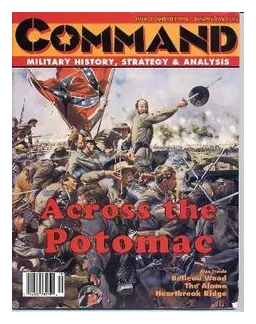
Simulation of the Seven Days' Battles which started Robert E. Lee on the road to glory.
Core mechanisms
Key systems that shape the decisions players make.
Read the full game description
Simulation of the Seven Days' Battles which started Robert E. Lee on the road to glory. The setting is the Union’s Peninsula Campaign in the spring of 1862. McClellan has formed and trained a large army, transported it by sea in an outflanking maneuver, marched it to the gates of the Confederate capital, and is poised to capture the city and probably bring an end to the rebellion. On the Confederate side Lee has taken over the Army after Johnston was wounded. Unlike Johnston, who was content to fight a largely defensive campaign, Lee gathered every unit he could get his hands on and launched his own offensive. The Union had placed its army in an awkward position, with one corps north of Chickahominy River and the rest south of it. Lee’s plan, and the position of the units when the game starts, was to crush the Union Corps and then drive the rest of McClellan’s army from the capital, destroying as much of it as he possible could. With that accomplished he would have a free hand to turn north. The system is a simplified version of two games, the last area-impulse Avalon Hill published, Breakout: Normandy, and MMP's Monty's Gamble: Market Garden. The game features leaders who are rated for initiative and combat effectiveness. Another mechanism in the game is the “advantage” marker which can be traded to the opponent to do things like rally, conduct a combined assault, declare a heroic defense that turns a success into a stalemate, or receive additional replacements. The victory conditions are based on territorial control. For the Union that was Richmond. For the Confederacy that was the Union supply heads – White House Landing and Harrison’s Landing – and Malvern Hill. A key decision for the Union player is when to shift his supply train from White House Landing to the more secure location at Harrison’s Landing. The unit scale is divisional including artillery and cavalry. There is the campaign game, and a few optional rules. Playing time should be under three hours between experienced players.