Overview
At a glance
Is this game right for my group?
ABG editorial scores on a 1–5 scale.
Harder to teach
High replayability
Highly interactive
Scales well
Deep strategy
How it plays
How does it play?
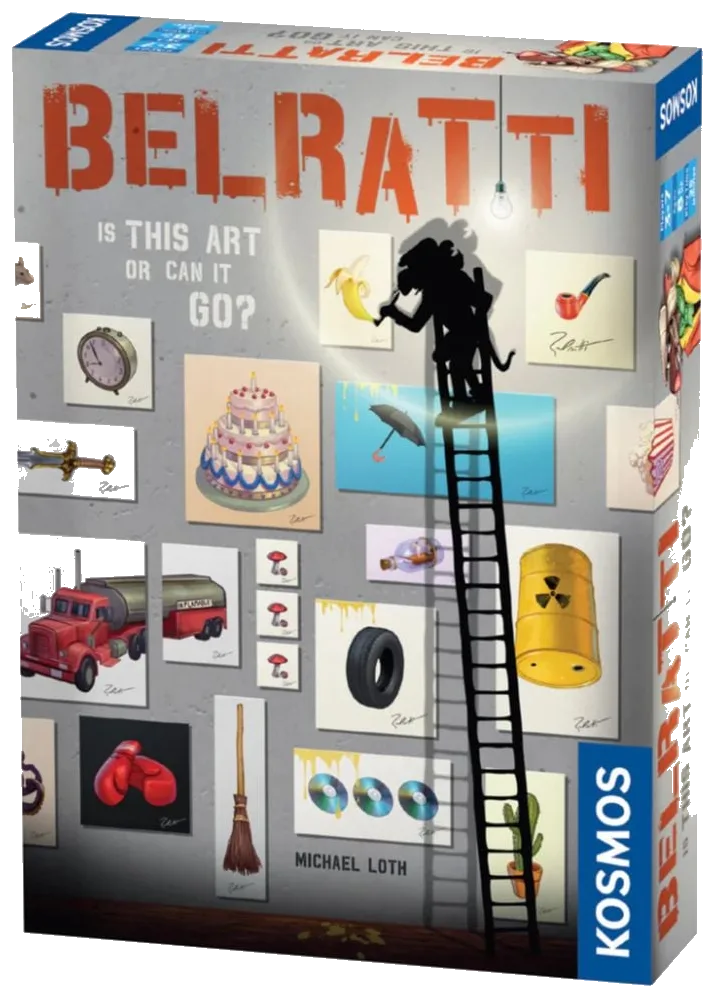
You are buying artwork for your museum, always trying to meet the current trends and finding genuine art from your associates. But the famous Belratti is trying to cheat his own fake paintings into your collection.
Core mechanisms
Key systems that shape the decisions players make.
Read the full game description
You are buying artwork for your museum, always trying to meet the current trends and finding genuine art from your associates. But the famous Belratti is trying to cheat his own fake paintings into your collection. In Belratti, players are split into two roles — buyers and painters — and are playing against the game. The game presents two cards as topics for which the buyers need to buy paintings. They ask for a certain number of cards, and the painters have to collectively meet this target number. The painters select cards from their hands they think will fit the most to one of the topics. Then additional cards are added as Belratti's fakes. All cards are shuffled upside down, then flipped up. The buyers then have to select all the cards from the painters, not the fake cards by Belratti. The roles change after each round. If too many fakes are bought, the players lose. (The name of the game is obvioulsy derived from the name of the German art forger W. Beltracchi)