Overview
At a glance
Is this game right for my group?
ABG editorial scores on a 1–5 scale.
Harder to teach
High replayability
Highly interactive
Scales well
Deep strategy
How it plays
How does it play?
From the publisher's website: Each player will take the role of the operational theater commander.
Core mechanisms
Key systems that shape the decisions players make.
Grid Movement
Move pieces between adjacent spaces on a regular grid.
Dice Rolling
Roll dice to introduce uncertainty into actions, production, movement, or resolution.
Chit-Pull System
Draw tokens to determine which units, factions, or events activate next.
Movement Points
Spend a movement allowance across spaces with different costs.
Simulation
Model a real or imagined system through detailed cause-and-effect rules.
Hexagon Grid
Use a hexagonal map where each space connects evenly in six directions.
Read the full game description
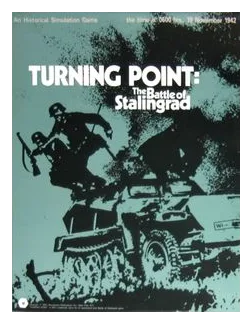
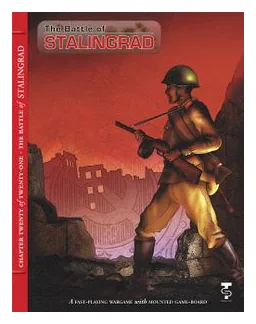
From the publisher's website: Each player will take the role of the operational theater commander. You still have leaders with short names and shorter tempers looking over your shoulder and telling you want to do (handled in game terms with directives and procedures that turn your decision making choices as much into "How do I please him?" as "How do I beat the enemy?") Counters represent mostly Soviet armies and German corps, with "assets" that can be attached to both, and minor Axis allies represented as well. Map scale is 55km to the hex, with 2 turns per month. The Battle of Stalingrad manages to provide monster game nuances in a game small in size with innovative design. For example, the sequence of play is not the same for each side. And why should it be? The Axis and Soviet armies do not do the same tasks each turn, because their armies operated differently. The Soviet player actually allocates supplies as he sees fit. Does he reward success or try to stave off defeat? Both players use Tactical and Strategic movement, as they move their forces around the battlefield. German Primary and Secondary objectives are determined randomly (and hidden from the Soviets!). Side operations in the Caucasus offer additional victory points but occupy units to achieve them. Are the points worth the cost? Operation Uranus, the great Soviet counteroffensive, has optional start times, with incentives for delay (if the rest of the Soviet front can hold out!). Sudden death victory is possible for both sides, encouraging that extra effort that could win it all...or leave one exposed and exhausted. At the end of the game, key point adjustments and multipliers get factored in and compared. Short of the Sudden Death victory, which side really "wins" can be in doubt to the very end. As it should be, in a situation like this. Part of the TPS, "Decisive Battles" series That means straightforward rules, key insights into the history behind the game, and designs aimed at one-session conclusions and high replay value. With shifting objectives and variable entry times for key units, no two Stalingrad games will play the same.