Overview
At a glance
Is this game right for my group?
ABG editorial scores on a 1–5 scale.
Harder to teach
High replayability
Highly interactive
Scales well
Deep strategy
How it plays
How does it play?
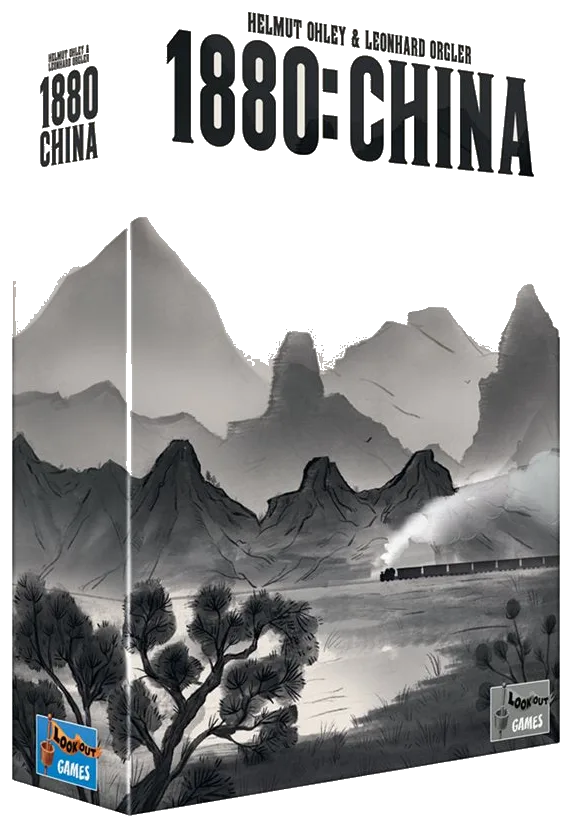
In 1880: China, based on 1829 by Francis Tresham, the players become railway barons in the far east, experiencing China's railway history in a game that was designed to represent related historical events as correctly as possible within its own game mechanisms.
Core mechanisms
Key systems that shape the decisions players make.
Auction/Bidding
Bid against other players to determine who receives an item, action, or priority.
Stock Holding
Acquire shares whose value depends on companies, assets, or player actions.
Network and Route Building
Create connected routes that improve reach, delivery, control, or scoring.
Tile Placement
Place tiles to build a shared or personal spatial arrangement.
Read the full game description
In 1880: China, based on 1829 by Francis Tresham, the players become railway barons in the far east, experiencing China's railway history in a game that was designed to represent related historical events as correctly as possible within its own game mechanisms. Being a classic 18xx game, the players compete to become the richest. In order to gain money, they buy and sell shares of China's historical railway companies, build and expand their railway network, and let trains travel on the networks. Shares of successful companies are worth more, and owning them will increase the chance to win the game. In the end, the player with the highest wealth combined from cash and shares wins. 1880: China innovates on the 18xx model as follows: Turn order for companies doesn't change with the evolving stock prices; it is set along with the par price when a player opens a company. The game includes a player-manipulated ratio of stock rounds and operation rounds. For example, a new stock round occurs when the last of a type of train is bought.