Overview
At a glance
Is this game right for my group?
ABG editorial scores on a 1–5 scale.
Harder to teach
High replayability
Highly interactive
Scales well
Deep strategy
How it plays
How does it play?
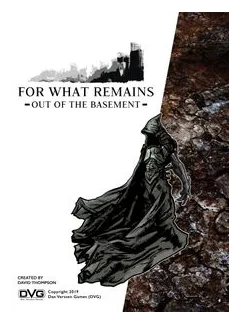
For What Remains is a skirmish-level series of three wargames set in a post-apocalyptic near future: Streets of Ruin Blood on the Rails Out of the Basement Streets of Ruin features the Combine and the Freemen Coalition factions, set in the Streets of Ruin campaign.
Core mechanisms
Key systems that shape the decisions players make.
Chit-Pull System
Draw tokens to determine which units, factions, or events activate next.
Line of Sight
Visibility between pieces determines valid targets, movement, or effects.
Modular Board
Build the play area from interchangeable sections that vary between games.
Square Grid
Use an orthogonal grid where position and adjacent spaces shape movement or placement.
Read the full game description
For What Remains is a skirmish-level series of three wargames set in a post-apocalyptic near future: Streets of Ruin Blood on the Rails Out of the Basement Streets of Ruin features the Combine and the Freemen Coalition factions, set in the Streets of Ruin campaign. The Freemen Coalition is a loose-knit band of human rebels who specialize in guerrilla warfare, and the Combine is the military arm of the government that rules over much of what is left of the world. The game is designed for 2-player competitive play or solitaire play, and each set can be played by itself standalone, or combined with other sets to form a larger narrative. Players control characters from one of the game’s six Factions. There are two ways to play For What Remains: skirmishes and campaigns. Skirmishes are standalone games played for a single victory, with no lasting repercussions. Campaigns are a series of skirmishes linked together to form a larger narrative. For What Remains is a scenario driven game. Each scenario typically has multiple objectives, and combat between factions is usually secondary. Players win skirmishes by gaining victory points through accomplishing these objectives. The game board is built from modular tiles which are themed to represent different environments. The default game board is a destroyed urban setting. Players build the game board with nine modular tiles, each of which are divided into a 7x7 grid. Characters use the grids for movement. Each character is represented by a counter and has a corresponding character card and tokens. During campaign play, characters improve their attributes and develop new abilities as they progress from Recruit to Veteran and then Elite level. A chit pull system is used for unit activation, and a step-loss system is used for tracking injuries during skirmishes. —description from the designer