Overview
At a glance
Is this game right for my group?
ABG editorial scores on a 1–5 scale.
Harder to teach
High replayability
Highly interactive
Scales well
Deep strategy
How it plays
How does it play?
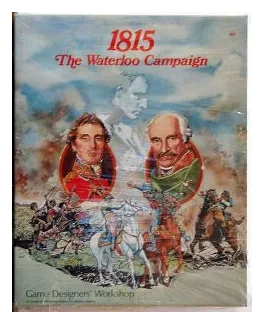
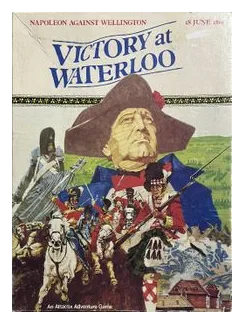
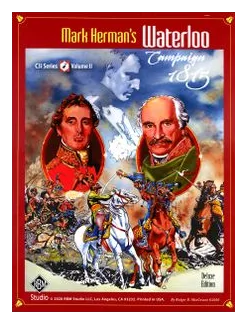
Waterloo Campaign 1815 is a low complexity wargame focused on French Emperor Napoleon Bonaparte's 1815 Belgian campaign that resulted in his final defeat at the Battle of Waterloo on June 18th.
Core mechanisms
Key systems that shape the decisions players make.
Read the full game description
Waterloo Campaign 1815 is a low complexity wargame focused on French Emperor Napoleon Bonaparte's 1815 Belgian campaign that resulted in his final defeat at the Battle of Waterloo on June 18th. Napoleon was opposed by a Coalition of Anglo-Allied forces under the Duke of Wellington and Prussian forces under Generalfeldmarschall von Blucher. Game Design by Mark Herman. Volume II in the C3i Series. INSIDE C3i Magazine Nr33 published by RBM Studio.