Overview
At a glance
Is this game right for my group?
ABG editorial scores on a 1–5 scale.
Harder to teach
High replayability
Highly interactive
Scales well
Deep strategy
How it plays
How does it play?
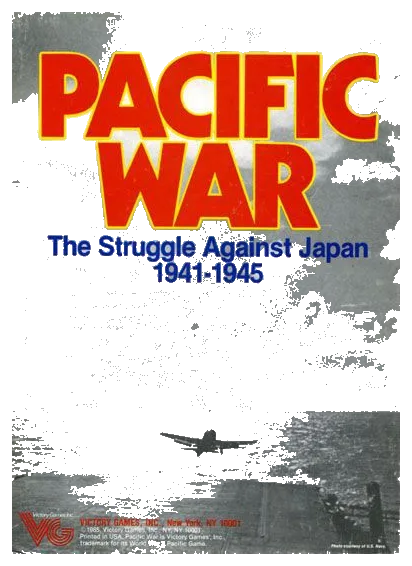
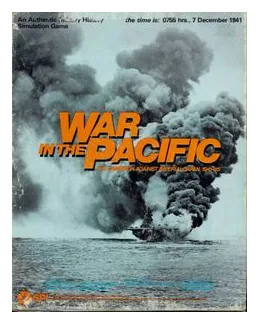
War in the Pacific – The Campaign Against Imperial Japan, 1941-45 is a multi-level simulation of the Pacific Theater of Operations during World War Two.
Core mechanisms
Key systems that shape the decisions players make.
Read the full game description
War in the Pacific – The Campaign Against Imperial Japan, 1941-45 is a multi-level simulation of the Pacific Theater of Operations during World War Two. The game enables players to recreate the entire course of the war, from the opening Japanese attack on December 7, 1941 to the climactic Allied assaults in the closing days of 1945. This Monster sized game simulates the conflict in the Pacific on a seven section map representing some 30% of the globe, across which cardboard playing pieces move and engage in combat through an hexagonal grid, which functions much like a chessboard in regulating movement. Game components: Rules booklet (56 pages) Scenarios booklet (12 pages) Two charts and tables booklets (16 pages) 3,200 die-cut playing pieces Seven 22" x 34" colored soft map sheets Playing aids, displays and cycle tracks Air/Surface Tactical Display Allied Air Display Allied Game Turn/Cycle Record Track Allied General Record Track Allied Naval Task Force Display Allied Off-Map Movement Display Japanese Air Display Japanese Game-Turn/Cycle Record Track Japanese General Record Track Japanese Naval Task Force Display 2 Dice 2 Plastic trays for playing piece storage Errata (as of December 1978) Level Of Complexity: Very High Average Playing Time: 6 hours (Midway scenario) to 200+ hours