Overview
At a glance
Is this game right for my group?
ABG editorial scores on a 1–5 scale.
Harder to teach
High replayability
Highly interactive
Scales well
Deep strategy
How it plays
How does it play?
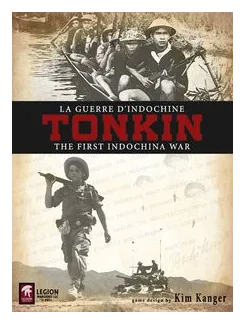
(from Legion wargames website:) Tonkin is a two player wargame that covers the crucial period of the French-Indochina War fought between the Viet Minh and France from 1946 to 1954.
Core mechanisms
Key systems that shape the decisions players make.
Read the full game description
(from Legion wargames website:) Tonkin is a two player wargame that covers the crucial period of the French-Indochina War fought between the Viet Minh and France from 1946 to 1954. The game focuses on the intensive years from 1950 to 1954 in the northern part of Vietnam, called Tonkin, and Laos. It is a game of high interactive play where both players have a set of ten operation points and a number of supply dumps. By spending operations points you will be able to perform different, mostly non-combat, actions. By expending a supply dump you will also be allowed to perform combat missions. But there will be a limited number of supply dumps to expend and they will also be needed to keep units in supply. When you spend operation points you will only be allowed to spend one, two or three points in a row before it is your opponents turn to spend his. This creates a game where you, in the long term, will have to plan and save supply and at the same time be prepared to react to your opponent's actions. In the short term you will be forced to make decisions based upon the number of operation points you have been given to spend in a row and the missions you need to accomplish. Contents: 22" x 34" map 352 each .6" Game Counters 24 pages rulebook 4 ea. 8 1/2" x 11" Charts 3 ea. 8 1/2" x 11" Information 5 Scenarios + Campaign Game Map Scale: 12.5 miles per hex Unit Size: Regiments / Battalions Time Scale: 1 month per turn