Overview
At a glance
Is this game right for my group?
ABG editorial scores on a 1–5 scale.
Harder to teach
High replayability
Highly interactive
Scales well
Deep strategy
How it plays
How does it play?
This fantasy wargame is really two games in one. The Army game uses SPI zones-of-control and a combat results table.
Core mechanisms
Key systems that shape the decisions players make.
Action Points
Spend a limited allowance of points across several possible actions each turn.
Role Playing
Make decisions or communicate from the perspective of an assigned character.
Variable Player Powers
Each player has different abilities, restrictions, or strategic advantages.
Hexagon Grid
Use a hexagonal map where each space connects evenly in six directions.
Simulation
Model a real or imagined system through detailed cause-and-effect rules.
Zone of Control
Restrict or influence movement through areas controlled by nearby pieces.
Read the full game description
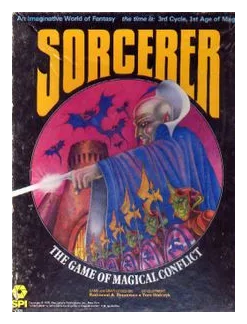
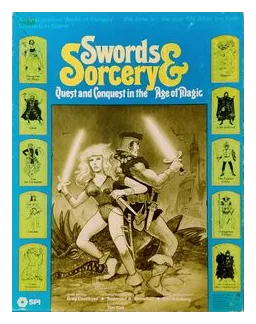
This fantasy wargame is really two games in one. The Army game uses SPI zones-of-control and a combat results table. Forces include elves, dwarves, orcs, spiders, swamp creatures and a host of others set in a fictional valley on a fictional world. Some of the more exotic inclusions are memorable for their pun value: Unamit Ahezredit, Logarithm Son of Algorithm; places such as the Evelyn Woods and the Stream of Consciousness, as well as the notorious Hills of Avalon; and peoples such as the Corflu (Correction Fluid) Cultists, the (communist) Orcish Revolutionary Council, and the dreaded Killer Penguins. X the Unknown could potentially conjure the SS Wiking Division. The Quest game is concerned exclusively with characters and is akin to a role-playing game. Credited developer is Eric Goldberg. The game appeared with two covers: a blue box with a Tim Kirk illustration and a red box with a John Butterfield illustration. The games are otherwise identical.