Overview
At a glance
Is this game right for my group?
ABG editorial scores on a 1–5 scale.
Harder to teach
High replayability
Highly interactive
Scales well
Deep strategy
How it plays
How does it play?
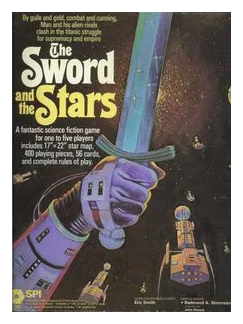
Sword and the Stars sets the stage for interstellar conflict between vying empires on such a scale (the map depicts about 1/4 of a spiral galaxy) that individual ships and even fleets become insignificant.
Core mechanisms
Key systems that shape the decisions players make.
Read the full game description
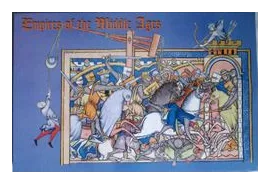
Sword and the Stars sets the stage for interstellar conflict between vying empires on such a scale (the map depicts about 1/4 of a spiral galaxy) that individual ships and even fleets become insignificant. You pay for and resolve entire interstellar campaigns with cards representing massive scale investment of manpower and resources over 4 Earth years of operations, each player round representing the passage of 20 years. Players direct the fate of interstellar empires through expansion or consolidation by means of conquests, raids, governing, building planetary defenses, commerce, and diplomacy. The game was derived from two existing popular SPI titles. While adding many subtle changes in its own right, it combines the highly successful system used in Empires of the Middle Ages with the graphic layout used for Freedom in the Galaxy. Technology and economics are abstracted, but both play a large role in just about every aspect of the game. Stargates allow players to conduct interstellar operations against any star system, free of range constraints. This means that in an interstellar war, nowhere is safe from your enemies. Includes a mechanism for a sort of Galactic Security Council, where players can scheme all sorts of mischief against each other. Ten scenarios (including the "Galactic Cycle" campaign game) are supplied. A "short" game will depict a period lasting about 200 years, while for the long "grand campaign" scenario it is recommended to play "at least" 1000 years. The Sword and the Stars is more compact than Empires. Includes 400 counters, 56 year cards, a 17 x 22" map depicting a total of 42 star systems. Maximum 5 players (3-4 recommended). Historical Note: Writing about SPI's Empires of the Middle Ages (q.v.), editor Kula included a sidebar quote from Redmond Simonsen to the effect that "a good number of people...would really enjoy the game if they'd just imagine that it's a science fictional or fantastic continent instead of Europe". Well, in 1981, the year after Empires of the Middle Ages was released, SPI produced another game using the same system and the missing science fiction premise, and The Sword and the Stars was born.