Overview
At a glance
Is this game right for my group?
ABG editorial scores on a 1–5 scale.
Harder to teach
High replayability
Highly interactive
Scales well
Deep strategy
How it plays
How does it play?
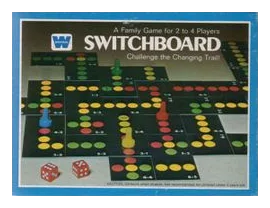
The playing surface consists of 36 tiles laid out numerically to form a square. Each tile contains spots which form a pathway; some form straight paths, some are angled paths and some form crossroads.
Core mechanisms
Key systems that shape the decisions players make.
Modular Board
Build the play area from interchangeable sections that vary between games.
Dice Rolling
Roll dice to introduce uncertainty into actions, production, movement, or resolution.
Tile Placement
Place tiles to build a shared or personal spatial arrangement.
Roll-and-Move
Roll dice or spin a dial to determine how far a piece moves.
Read the full game description
The playing surface consists of 36 tiles laid out numerically to form a square. Each tile contains spots which form a pathway; some form straight paths, some are angled paths and some form crossroads. As players advance their tokens along the paths, they also move the tiles in an attempt to bottle up opponents while building the shortest possible path to the Finish for themselves. Thus, the pathway is continuously shifting, branching out, and breaking into segments. Also published in 1965 as a promotional game for Culligan, title "Hey, Culligan Man!".