Overview
At a glance
Is this game right for my group?
ABG editorial scores on a 1–5 scale.
Harder to teach
High replayability
Highly interactive
Scales well
Deep strategy
How it plays
How does it play?
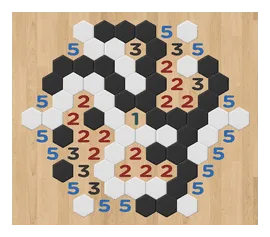
Strands is a hard-to-master 2-player puzzle game with rules that fit in two tweets: 1. To start, Black covers any space marked “2”.
Core mechanisms
Key systems that shape the decisions players make.
Read the full game description
Strands is a hard-to-master 2-player puzzle game with rules that fit in two tweets: 1. To start, Black covers any space marked “2”. 2. From then on, starting with White, the players take turns. On your turn, cover up to X empty spaces marked “X”. For example, you could cover any 3 empty spaces marked “3”. 3. The game ends when the board’s full. The player with largest contiguous group of stones wins. If tied, compare the players’ second-largest groups, and so on, until you come to a pair which aren’t the same size. Whoever owns the larger wins The numbers on the board make the game's interface clear and intuitive, and they balance the value of the board's spaces. The board's center is the most powerful place to put pieces, but you can place more pieces per turn near the edge. You must navigate this tradeoff to win. Read the Strands Strategy Primer here. Read the Strands page at the designer's site here here.