Overview
At a glance
Is this game right for my group?
ABG editorial scores on a 1–5 scale.
Harder to teach
High replayability
Highly interactive
Scales well
Deep strategy
How it plays
How does it play?
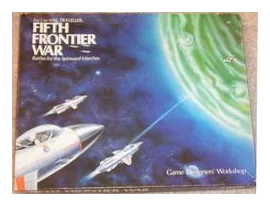
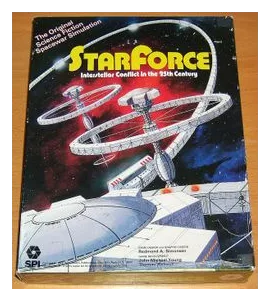
Adapted from the box: The game is a simulation of events within a conjectural future history in which telekinesis is used to move ships through space.
Core mechanisms
Key systems that shape the decisions players make.
Grid Movement
Move pieces between adjacent spaces on a regular grid.
Action Queue
Place actions into an ordered queue that resolves now or on later turns.
Simulation
Model a real or imagined system through detailed cause-and-effect rules.
Hexagon Grid
Use a hexagonal map where each space connects evenly in six directions.
Read the full game description
Adapted from the box: The game is a simulation of events within a conjectural future history in which telekinesis is used to move ships through space. It is played on a map which displays 74 star systems in a three-dimensional "sphere" of space measuring roughly 40 light years in diameter, with Earth's home system at the center. A grid of hexagons printed over the map is used to regulate movement and position of pieces. Pieces' exact locations are not known until they "meet" in the same three-dimensional "hex space". The pieces in the game represent groups of four interstellar spaceships (StarForces) and space stations (StarGates). Each Player maneuvers his pieces (via Stellar Shifting) to engage those of the enemy. Movement is plotted and executed simultaneously. The game proceeds this way (for a specified number of turns) as the players try to achieve the objectives set forth in the rules. No prior knowledge is required to play the game - just a little ingenuity and common sense. Battles take place when units are in the same three-dimensional location. In the Basic Game, the attacking Player compares the total variable strengths of the involved units and consults a simple probability table to determine the outcome of each battle. In the Advanced Game, a small tactical maneuver map is used. When enemy forces engage on the main map, they are transferred to the tactical display. Here they move (in three dimensions), attack and defend using a fixed number of action points per tactical turn. Combat outcomes result in pieces not being destroyed but being "randomised"; usually to a location far from all the action. Part of the StarForce Trilogy box set, along with Outreach and StarSoldier. There are also special rules to use Starsoldier as a tactical game for StarForce.