Overview
At a glance
Is this game right for my group?
ABG editorial scores on a 1–5 scale.
Harder to teach
High replayability
Highly interactive
Scales well
Deep strategy
How it plays
How does it play?
Shining Path is a game simulating the conflict between the Sendero Luminoso or "Shining Path" Maoist guerrillas and the Government of Peru. This guerrilla war started in 1980 and continues to this day.
Core mechanisms
Key systems that shape the decisions players make.
Action Points
Spend a limited allowance of points across several possible actions each turn.
Area Majority
Compete to have the strongest presence in areas that award control or points.
Dice Rolling
Roll dice to introduce uncertainty into actions, production, movement, or resolution.
Area Movement
Move pieces between connected regions rather than along individual spaces.
Simulation
Model a real or imagined system through detailed cause-and-effect rules.
Read the full game description
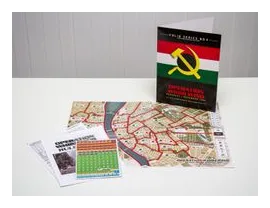
Shining Path is a game simulating the conflict between the Sendero Luminoso or "Shining Path" Maoist guerrillas and the Government of Peru. This guerrilla war started in 1980 and continues to this day. During the game the Sendero player tries to fray the fabric of Peruvian society and replace government power with his own structures. Meanwhile the government player fights a struggle against the Sendero guerrillas, corruption, and the wretched state of the Peruvian economy. Contents: 1 color 17" x 22" map, 140 double-sided counters (to be assembled), rules, charts and tables.