Overview
At a glance
Is this game right for my group?
ABG editorial scores on a 1–5 scale.
Harder to teach
High replayability
Highly interactive
Scales well
Deep strategy
How it plays
How does it play?
The time has come for the tribe to leave its shelter and head for new lands.
Core mechanisms
Key systems that shape the decisions players make.
Read the full game description
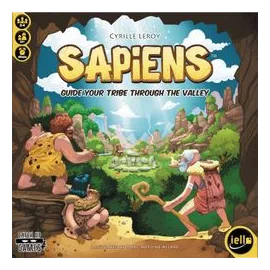
The time has come for the tribe to leave its shelter and head for new lands. As the chief of your clan, it's up to you to guide your prehistoric people through the valley: Take advantage of the environment, pick and hunt for food, discover big and safe caverns for the upcoming winter, gather your tribe and discover the valley! Sapiens is a short and easy-to-learn tile-placement game that can prove much deeper than it seems for gamers. Each player has a personal game board that represents the valley on which they will play tiles to determine the journey of their tribe through several prehistoric life scenes. Their aim is to gather food points on the plains and in the forests of the valley and to get shelter points for reaching caves in the mountains. A player's turn consists of two steps: Connect one new tile from the four in his personal pool to the tiles already in play on his board, with connected scenes needing to match. These placements earn food points when a connection is made, earns shelter points when a cave is reached, and sometimes provides a special ability based on the connected scenes. Choose a new tile from the five available in a common pool to re-fill his personal pool to four tiles. Sapiens relies on instinctive domino-like mechanisms that are improved by interesting twists: Laying tiles on personal (modular) game boards brings a bit of a puzzle feel to the game. Having two separate scores — food and shelter — and knowing that only their lower one matters when determining who wins confronts players with interesting needs and dilemmas. Including special powers linked to the eight different scenes represented on the tiles brings a lot of interaction and choices.