Overview
At a glance
Is this game right for my group?
ABG editorial scores on a 1–5 scale.
Harder to teach
High replayability
Highly interactive
Scales well
Deep strategy
How it plays
How does it play?
Linked game discovered from BGG. Full scrape pending.
Core mechanisms
Key systems that shape the decisions players make.
Open Drafting
Select cards or items from a shared face-up display.
Set Collection
Gather related items that become more valuable when scored together.
Dice Rolling
Roll dice to introduce uncertainty into actions, production, movement, or resolution.
Network and Route Building
Create connected routes that improve reach, delivery, control, or scoring.
Tile Placement
Place tiles to build a shared or personal spatial arrangement.
Variable Player Powers
Each player has different abilities, restrictions, or strategic advantages.
Read the full game description
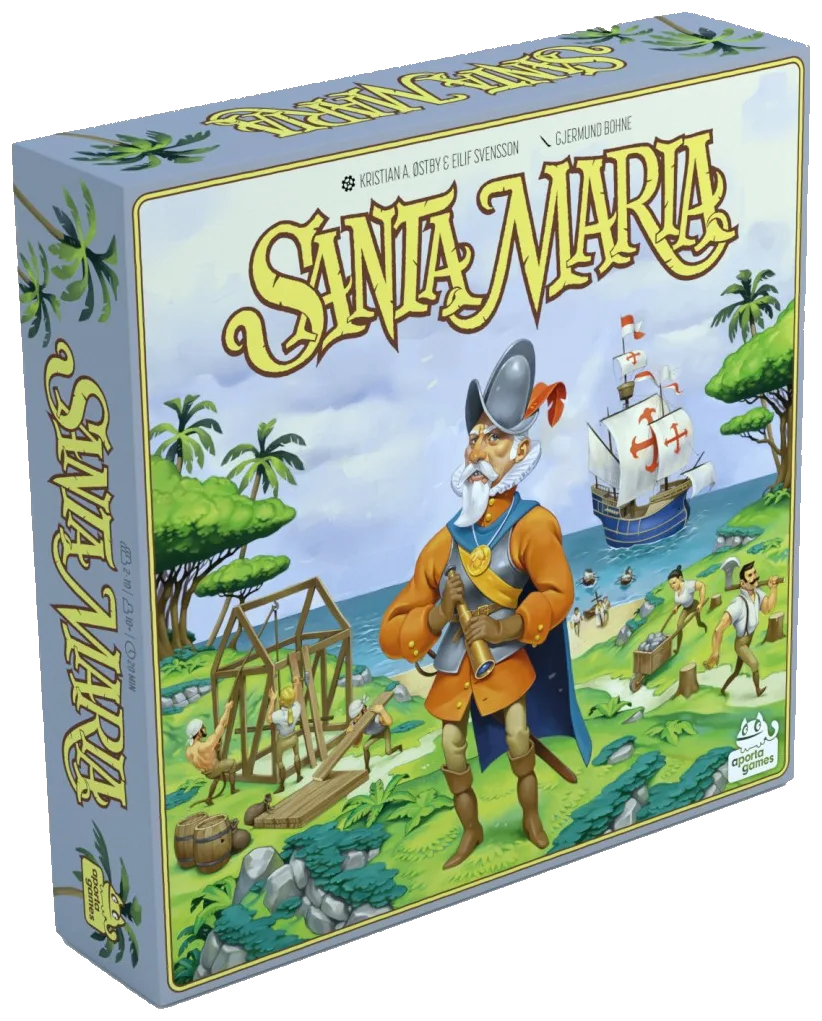
Santa Maria is a streamlined, medium complexity Eurogame in which each player establishes and develops a colony. The game features elements of dice drafting and strategic engine building. The game is low on luck and has no direct destructive player conflict; all components are language independent. In the game, you expand your colony by placing polyominoes with buildings on your colony board. Dice (representing migrant workers) are used to activate buildings; each die activates a complete row or column of buildings in your colony. The buildings are activated in order (left to right / top to bottom), then the die is placed on the last activated building to block this space. It is therefore crucial where you put new buildings in your colony, and in which order you use the dice. As the game progresses, you produce resources, form shipping routes, send out conquistadors, and improve your religious power to recruit monks. When you recruit a monk, you must decide if it becomes a scholar (providing a permanent special ability), a missionary (for an immediate bonus) or a bishop (for possible end game points). The player who has accumulated the most happiness after three rounds wins. The available specialists, end game bonuses and buildings vary from game to game, which makes for near endless replayability.