Overview
At a glance
Is this game right for my group?
ABG editorial scores on a 1–5 scale.
Harder to teach
High replayability
Highly interactive
Scales well
Deep strategy
How it plays
How does it play?
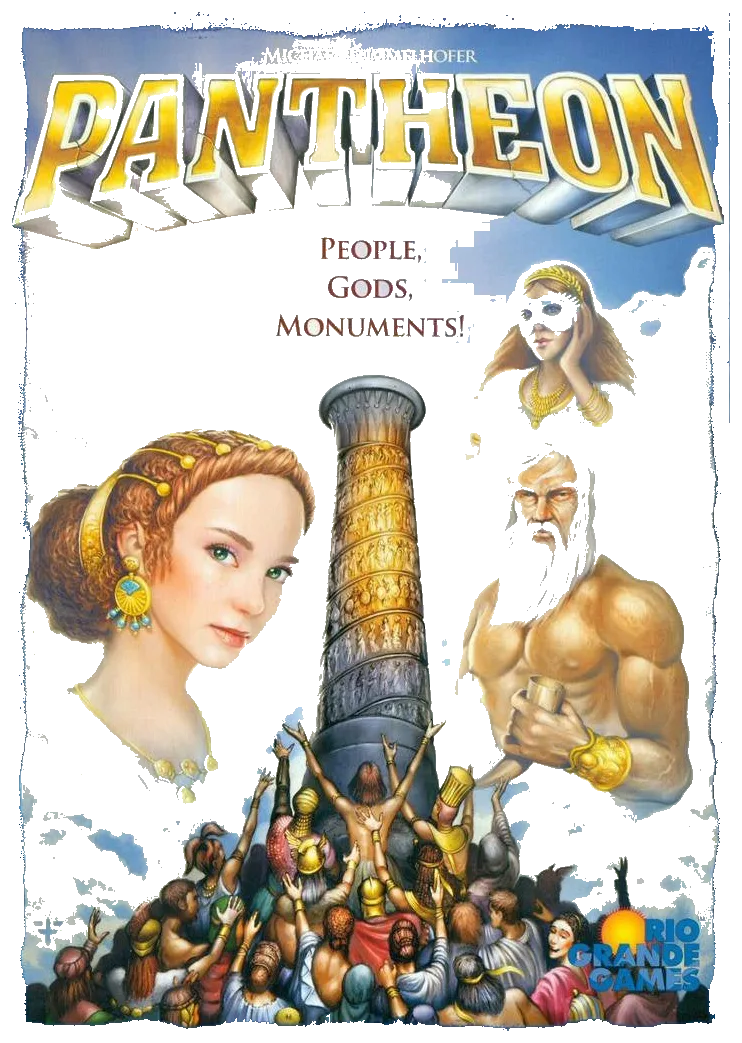
From BGG News (Eric Martin): "In Pantheon, players enact the comings and goings of various peoples in the Mediterranean: Egyptians, Romans, Iberians, Germans, etc.
Core mechanisms
Key systems that shape the decisions players make.
Open Drafting
Select cards or items from a shared face-up display.
Set Collection
Gather related items that become more valuable when scored together.
Hand Management
Time and sequence a limited hand of cards to preserve future options.
Network and Route Building
Create connected routes that improve reach, delivery, control, or scoring.
Variable Player Powers
Each player has different abilities, restrictions, or strategic advantages.
Variable Phase Order
The order of phases changes according to player choices or game state.
Read the full game description
From BGG News (Eric Martin): "In Pantheon, players enact the comings and goings of various peoples in the Mediterranean: Egyptians, Romans, Iberians, Germans, etc. They accumulate as many raw materials as possible to build monuments to the gods, but the ways of the gods are unpredictable. "On a turn, a player has a number of options. He can choose to travel with his people by using the big wooden footprint piece, then smaller footpints to mark their path and block other players. He can buy materials to worship the gods: dancers, farm produce, impressive temples, or prayers. He can use these offerings to take a god token, which may grant him special abilities as well as victory points. Finally, he may build monuments that are worth victory points at the end of the game. The game lasts six rounds with two scoring periods."