Overview
At a glance
Is this game right for my group?
ABG editorial scores on a 1–5 scale.
Harder to teach
High replayability
Highly interactive
Scales well
Deep strategy
How it plays
How does it play?
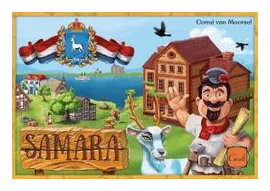
Travel back through history to a settlement called Samara, where you lead a group of builders. At the start of the game, they can build only a sandcastle, cave or huts.
Core mechanisms
Key systems that shape the decisions players make.
Read the full game description
Travel back through history to a settlement called Samara, where you lead a group of builders. At the start of the game, they can build only a sandcastle, cave or huts. For more complex buildings, you first invest time in skills, strength, or new workers. Building special projects gives you benefits or hurts all your rivals. In the end you want to have the most prestigious buildings. The worker timetrack is the key mechanism. Each of your choices costs a number of your workers a number of months. Your workers can spend time on: Improving skills to build with wood (saw tool), stone (trowel tool) and glass (blowing tool). Building houses or special projects. Getting a new worker or exercising to become a stronger worker. Going on vacation. The spaces on the game board determine how many workers (1-4 on the left board axis) are occupied how many months (1-9 on the bottom board axis). Players plan to let their workers spend time effectively, choosing when to invest and when to build for prestige. The prestige points determine who is the best foreman of Samara.