Overview
At a glance
Is this game right for my group?
ABG editorial scores on a 1–5 scale.
Harder to teach
High replayability
Highly interactive
Scales well
Deep strategy
How it plays
How does it play?
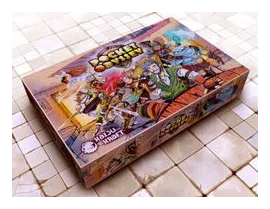
Pocket Odyssey is a micro dungeon crawling game inspired by traditional table top RPG games. It takes place in the Dungeonfell, also known as the buried plane, with all but one player acting as a group of adventurers on a quest.
Core mechanisms
Key systems that shape the decisions players make.
Modular Board
Build the play area from interchangeable sections that vary between games.
Dice Rolling
Roll dice to introduce uncertainty into actions, production, movement, or resolution.
Open Drafting
Select cards or items from a shared face-up display.
Acting
Communicate information by performing without directly stating the answer.
Variable Player Powers
Each player has different abilities, restrictions, or strategic advantages.
Storytelling
Create or extend a narrative in response to prompts or game events.
Read the full game description
Pocket Odyssey is a micro dungeon crawling game inspired by traditional table top RPG games. It takes place in the Dungeonfell, also known as the buried plane, with all but one player acting as a group of adventurers on a quest. The quest is created by the last player, known as the storyteller, who must create a set of challenges based off of quest cards randomly drawn at the start of the game. The game concept can be described as putting the spirit of a traditional pen and paper RPG into a micro table top game. Players pick a character background card (ex: Ogre Slayer, Swindler King, etc.) and add special power cards to them (ex: Fireball, Backstab, etc.) they then draw a Flaw card which gives them a unique attribute (ex: chronic liar, Impatient, etc.) and a personal goal card (in secret) which they must complete in addition to the main quest to win the game (ex: Outsmart an enemy, Betray a party member, etc.). During combat the game is played on modular map cards with heroes and monsters acting in sequence; the storyteller controls all the monsters. Heroes obtain loot cards at the end of combat in addition to leveling their characters stats. To win the game, each player must complete the main quest developed by the storyteller (through the use of the quest cards) as well as their own personal quest cards (which are kept hidden until completed).