Overview
At a glance
Is this game right for my group?
ABG editorial scores on a 1–5 scale.
Harder to teach
High replayability
Highly interactive
Scales well
Deep strategy
How it plays
How does it play?
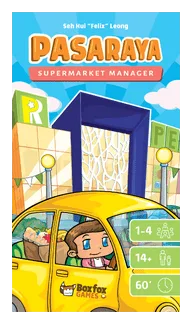
In the developing suburbs slowly developing itself into a thriving town, being the savvy entrepreneur you are, you noticed a great opportunity to open up a supermarket to not only serve the rapidly growing community but also to profit for the conveniences that you are able to offer. … Or so you think, in Pasaraya: Supermarket Manager you and your friends are entrepreneurs who had the same brilliant idea of opening up a supermarket and vying to become the richest supermarket tycoon in town.
Core mechanisms
Key systems that shape the decisions players make.
Deck / Bag Building
Add new pieces during play to improve the cards, tokens, or dice drawn later.
Set Collection
Gather related items that become more valuable when scored together.
Simulation
Model a real or imagined system through detailed cause-and-effect rules.
Solo / Solitaire Game
Provide rules and objectives designed for a single player.
Read the full game description
In the developing suburbs slowly developing itself into a thriving town, being the savvy entrepreneur you are, you noticed a great opportunity to open up a supermarket to not only serve the rapidly growing community but also to profit for the conveniences that you are able to offer. … Or so you think, in Pasaraya: Supermarket Manager you and your friends are entrepreneurs who had the same brilliant idea of opening up a supermarket and vying to become the richest supermarket tycoon in town. The game uses deck building in the context of a business simulation game: each player will start off with some money and inventory cards in the deck and a separate bank pile and supermarket area. In each turn, players would need to purchase inventory, stock up their supermarket, hire staff who bring their strengths into running the business and earn money by fulfilling customer demands. The game introduces twists to the deck building mechanic where money would be return back to the supply when spent, staff cards that be used in two different ways and having to manage resources between their own deck, bank and supermarket. The game rewards players who knows how to best manage the constant flux of their decks, plan their turns and make the best use of the hand they are given.