Overview
At a glance
Is this game right for my group?
ABG editorial scores on a 1–5 scale.
Harder to teach
High replayability
Highly interactive
Scales well
Deep strategy
How it plays
How does it play?
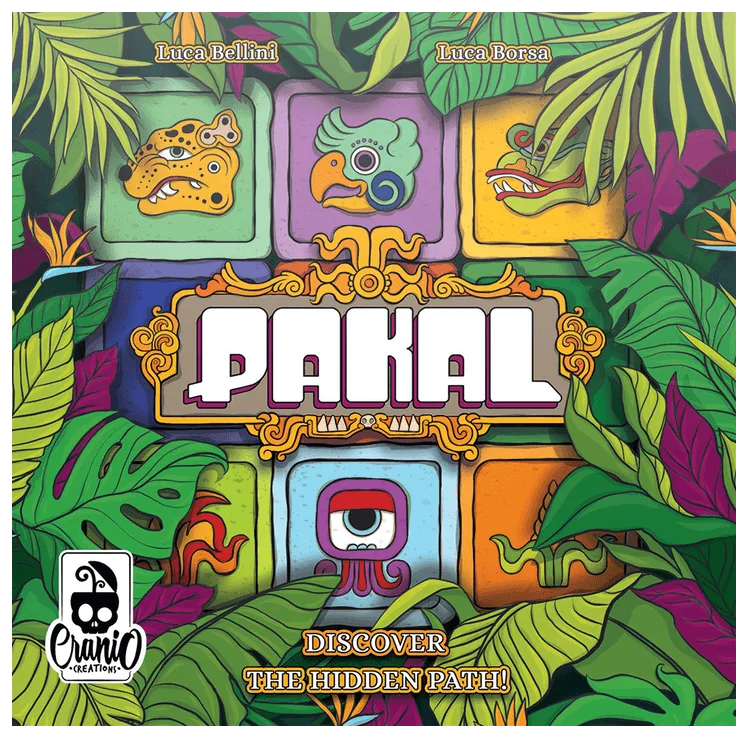
Pakal is a real-time sliding-puzzle game in which each player has a 4x4 grid filled with 15 blocks, some of which have a solid color on them and some of which are clear.
Core mechanisms
Key systems that shape the decisions players make.
Read the full game description
Pakal is a real-time sliding-puzzle game in which each player has a 4x4 grid filled with 15 blocks, some of which have a solid color on them and some of which are clear. Each round, an objective card is revealed, then players slide their blocks in their grid, trying to show only the symbols on that card in their grid and hiding any other symbols from view. If you do this before time runs out, you can grab one of the available scoring blocks, then move your token on the scoring track to the next such symbol on the track. Thus, the quicker you solve the puzzle, the more likely you are to grab a block that advances you the farthest. Whenever you cross a red line on the scoring track, you must replace a colored block in your grid with a clear one, thereby making it more difficult for you to solve objective cards in future rounds.