Overview
At a glance
Is this game right for my group?
ABG editorial scores on a 1–5 scale.
Harder to teach
High replayability
Highly interactive
Scales well
Deep strategy
How it plays
How does it play?
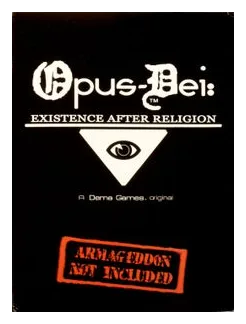
Opus-Dei: Existence After Religion™ is an atheist-themed game built around the world of philosophy, though no philosophical knowledge is needed to play, as it is a purely strategy-based game.
Core mechanisms
Key systems that shape the decisions players make.
Read the full game description
Opus-Dei: Existence After Religion™ is an atheist-themed game built around the world of philosophy, though no philosophical knowledge is needed to play, as it is a purely strategy-based game. The bonus-information, quotes and pictures of the philosophers, scientists and religious figures should however expand most peoples knowledge of philosophy. When playing the game, a queue of potentially existing philosophers, scientists and fools are lined up for each round. These humans are worth varying amounts of points, according to their intellectual status and magnitude. It is then up to each Zeitgeist, in their turn, to create the best of them into their particular World by playing up to two cards that can serve their best interests. The player with the most points at the end of the game wins!