Overview
At a glance
Is this game right for my group?
ABG editorial scores on a 1–5 scale.
Harder to teach
High replayability
Low interaction
Scales well
Deep strategy
How it plays
How does it play?
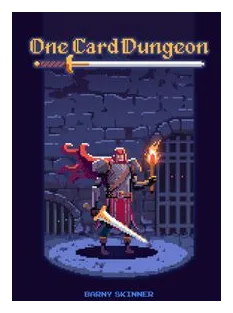
One Card Dungeon is a solo dice-placement dungeon crawl played on a single card. Fight through 12 increasingly challenging levels to reach the final prize - the Sceptre of M'Guf-yn.
Core mechanisms
Key systems that shape the decisions players make.
Action Points
Spend a limited allowance of points across several possible actions each turn.
Dice Rolling
Roll dice to introduce uncertainty into actions, production, movement, or resolution.
Grid Movement
Move pieces between adjacent spaces on a regular grid.
End Game Bonuses
Earn additional points for meeting conditions evaluated when the game ends.
Line of Sight
Visibility between pieces determines valid targets, movement, or effects.
Read the full game description
One Card Dungeon is a solo dice-placement dungeon crawl played on a single card. Fight through 12 increasingly challenging levels to reach the final prize - the Sceptre of M'Guf-yn. Both the Adventurer and the Monsters are represented on the map by Dice, with the value on top showing their current health. Each room has one type of Monster, with anywhere from 1 to 4 of that monster to defeat in each room. The basic game mechanic is rolling three dice, then assigning one dice to each of your Movement, Attack and Defense. Adding together your skill levels in each of these areas with the dice you have assigned gives you a total number of points in each of these areas to spend, for example if you have a Movement skill of 3 and assign a 4 dice to it, you would have 7 Movement points to spend that turn. After each room, you may upgrade one of your four skills - Movement, Attack, Defense, and Range. —description from the designer