Overview
At a glance
Is this game right for my group?
ABG editorial scores on a 1–5 scale.
Harder to teach
High replayability
Highly interactive
Scales well
Deep strategy
How it plays
How does it play?
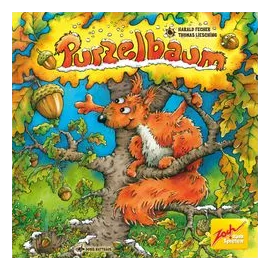
In Le Bois des Couadsous, you have a forest to cross to find lots of hazelnuts, and the first player to find five nuts wins the game. On the table, you have a grid of 3x3 forest cards.
Core mechanisms
Key systems that shape the decisions players make.
Read the full game description
In Le Bois des Couadsous, you have a forest to cross to find lots of hazelnuts, and the first player to find five nuts wins the game. On the table, you have a grid of 3x3 forest cards. The backs of each card are identical, and on the front they feature one of three images — mushroom, leaf or stone — in one of three colors: yellow, red or blue. In the twelve spaces adjacent to this grid are placed cards showing 1-3 hazelnuts. A player starts: he puts his squirrel card before a row/column of his choice and cross it by announcing out loud what he thinks on the back of the forest card. It begins with the first card, the player announces for example "leaf" or "yellow" (according if the elements or colors are in play) then turns the card over and compares the guess to the actual picture. Initially, we discover, that the cards are random. If the guess it correct, the player continues the path to the hazelnuts that await us on the other side. If it is wrong, it stops there, and the next player start. If the next player starts on the same row/column, he already knows what there is on the front of this card, unless he remembers more since it was the visible item at the beginning...! Players play with colors or the elements: initially it is them who choose. But as soon as a player has reaches a nut, everyone changes: those who played on the elements switches to colors and vice versa. One must therefore be remember everything and well remember what others reveal!