Overview
At a glance
Is this game right for my group?
ABG editorial scores on a 1–5 scale.
Harder to teach
High replayability
Highly interactive
Scales well
Deep strategy
How it plays
How does it play?
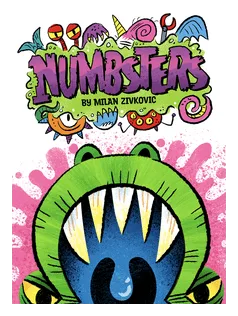
When hungry Numbsters form a line, arrange them well and you’ll be fine. But when they all begin to munch, avoid the Mouth or you’ll be lunch!
Core mechanisms
Key systems that shape the decisions players make.
Read the full game description
When hungry Numbsters form a line, arrange them well and you’ll be fine. But when they all begin to munch, avoid the Mouth or you’ll be lunch! Numbsters is a solo game that can be played in your hand or on a table. Each of the hungry Numbsters features a number and special ability. Starting with a stack of 6 random Numbsters (plus the Mouth card) you’ll need to eat, move, and manipulate your way to victory. If you can get down to just one Numbster and the Mouth remaining in your hand, you win! —description from the publisher HOW TO PLAY Each turn, draw a new Numbster into your hand, placing it at the top of the stack. Next, you may move one card to a different position in the stack OR swap any two cards’ positions. Lastly, it’s feeding time: one Numbster must eat another one. Typically, this requires two sequential Numbsters (for example, 16 and 17) separated only by the Mouth card. The smaller Numbster in the sequence can eat the bigger one, discarding it and starting a new turn. Of course, these Numbsters are odd creatures. Each one has an optional special ability that changes how the other Numbsters eat, allowing for powerful plays and big bites! The ability on the top Numbster in the stack is considered active while showing; when it’s used, that Numbster slides to the bottom of the stack. But be careful – if at any point the Mouth card reaches the top of the stack, it triggers its game-ending special ability…and eats YOU!