Overview
At a glance
Is this game right for my group?
ABG editorial scores on a 1–5 scale.
Harder to teach
High replayability
Highly interactive
Scales well
Deep strategy
How it plays
How does it play?
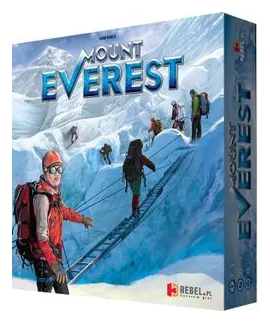
Mount Everest, Earth's highest mountain – to this day it's been climbed by almost 4,000 alpinists from around the world, with more and more coming each year. Most of them are tourists without the experience or skills needed to climb an eight-thousander.
Core mechanisms
Key systems that shape the decisions players make.
Read the full game description
Mount Everest, Earth's highest mountain – to this day it's been climbed by almost 4,000 alpinists from around the world, with more and more coming each year. Most of them are tourists without the experience or skills needed to climb an eight-thousander. Without proper help they wouldn't make it to the Himalayas, let alone brave the mighty Chomolungma. Fortunately, that's where you come in, an experienced mountaineer and mountain guide. You've got Broad Peak, K2 and other eight-thousanders under your belt, and you've climbed Mount Everest several times. This time you face a far greater challenge: You must lead a bunch of tourists to the peak and safely get them back to base. You gaze at the mountain and you know this to be true – what is child's play for you might be the last adventure of your clients. You must plan where to set up camp and how to deal with acclimatization, who to take up to the peak and when, and who to lead down the mountain. When you look at your clients' enthusiastic faces, you know that their lives are in your hands. In Mount Everest players take control of a team of two expert mountaineers who must lead as many tourists as they can to the peak and, of course, safely bring them back. Each player gets an identical deck of cards that are used for moving around the board. Players must decide where to set up camps and how much oxygen to bring to the top; only oxygen lets players get acclimatization cards, which allow tourists to survive the climb. Players must also decide what type of customers they want: the athletic, fairly competent climbers, or the wealthier and more prestigious amateurs. Climbing with one tourist in tow is easy, but the key to victory lies in guiding whole groups. Unfortunately, the more people you take with you, the higher the likelihood is of something going wrong. Also, as it is in the mountains, the weather will be a crucial factor. If a player can coordinate an expedition that avoids a crisis at the peak, he should be able to lead the happy tourists back to base. Who will become the best Himalayan guide?