Overview
At a glance
Is this game right for my group?
ABG editorial scores on a 1–5 scale.
Harder to teach
High replayability
Highly interactive
Scales well
Deep strategy
How it plays
How does it play?
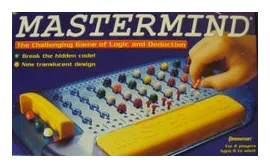
The travel version of the game Mastermind. It is the same game as Mastermind, but since it is smaller, the code-breaker only has 6 rows in which to guess the solution, instead of the usual 10 in the original version.
Core mechanisms
Key systems that shape the decisions players make.
Read the full game description
The travel version of the game Mastermind. It is the same game as Mastermind, but since it is smaller, the code-breaker only has 6 rows in which to guess the solution, instead of the usual 10 in the original version. In Mini Mastermind, one player is the code-maker, and the other player is the code-breaker. The code-maker makes a code out of any combination of 4 colors (out of 6 possible colors). The code-breaker has 6 guesses to figure out the code. After each code guess, the code-maker gives a clue, by placing a black peg for every correct color in the correct position, and placing a white peg for every correct color, in the wrong position. Players generally switch roles after the code is broken or the code-breaker failed to solve the solution. Generally after the second play after roles were switched, the winner is the one who solved the code in the fewest amount of guesses. A common version came in a small 2" X 5" plastic box with a playing board cover is encased in a slipsleeve. All of the components are kept neatly inside the box.