Overview
At a glance
Is this game right for my group?
ABG editorial scores on a 1–5 scale.
Harder to teach
High replayability
Highly interactive
Scales well
Deep strategy
How it plays
How does it play?
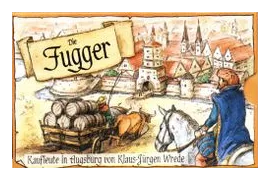
A Medieval game of trade and commerce, Die Händler is set in Europe, where trade wagons carry wares between six cities on the board. Essentially, players buy goods, load them onto wagons and send them for maximum profit in other cities.
Core mechanisms
Key systems that shape the decisions players make.
Commodity Speculation
Buy or influence goods whose values change before they are sold or scored.
Pick Up and Deliver
Collect goods at one location and transport them to another for rewards.
Variable Player Powers
Each player has different abilities, restrictions, or strategic advantages.
Track Movement
Advance pieces along a defined linear or branching track.
Read the full game description
A Medieval game of trade and commerce, Die Händler is set in Europe, where trade wagons carry wares between six cities on the board. Essentially, players buy goods, load them onto wagons and send them for maximum profit in other cities. The whole game looks very inviting. The medieval cities depicted on the board, together with the player crests, cardboard coins, money pouches, sticker decorated wagons and wooden commodity pieces, immediately creates the right atmosphere for the players. There are six cities - Paris, Cologne, Brugge, Gent, Vienna and Genoa - which are interconnected by roads. Three wagons carry goods from one city to another. No-one owns the wagons or controls any of them single-handedly, and in principle a player can put commodities on any transport. There are six different commodities - salt, iron, wine, silk, cloth and food - all of limited supply. The goal of the game is to make money by delivering goods to the towns, and use the money to buy increases in status. The game ends after a certain number of deliveries have been made and the winner is the player with the highest level of status.