Overview
At a glance
Is this game right for my group?
ABG editorial scores on a 1–5 scale.
Harder to teach
High replayability
Highly interactive
Scales well
Deep strategy
How it plays
How does it play?
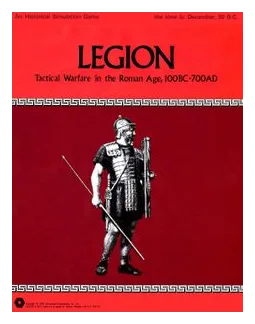
Legion, Tactical Warfare in the Roman Age, 100BC-700AD. An Historical Simulation Game, the time is: December 50 B.C.
Core mechanisms
Key systems that shape the decisions players make.
Movement Points
Spend a movement allowance across spaces with different costs.
Dice Rolling
Roll dice to introduce uncertainty into actions, production, movement, or resolution.
Hexagon Grid
Use a hexagonal map where each space connects evenly in six directions.
Simulation
Model a real or imagined system through detailed cause-and-effect rules.
Read the full game description
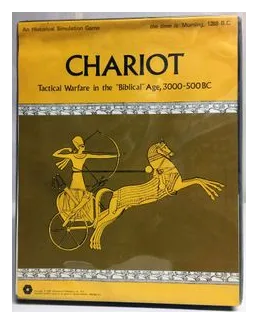
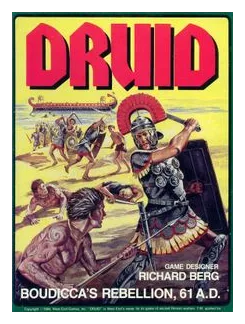
Legion, Tactical Warfare in the Roman Age, 100BC-700AD. An Historical Simulation Game, the time is: December 50 B.C. Tactical combat system pits Roman Legions against Barbaric Hordes, Carthage, and Legion vs. Legion. One of five games in a series by SPI called PRESTAGS (the others were CHARIOT, SPARTAN, VIKING and YEOMAN). Tactical level game. Each game shares a set of the same common rules. Each game also has a set of exclusive rules that highlight features of warfare during the period that game covers. Standard Game Rules for Chariot, Spartan, Legion, Viking and Yeoman. Exclusive Rules & Scenarios Booklet for Legion. Game Map & Die. 400 counters Scenarios Included: Numidia (106 BC) Vercellae (101 BC) Apulia (71 BC) Cabira (72 BC) The Sambre (57 BC) Carrhae (53 BC) Pharsalus (48 BC) Second Phillipi (42 BC) Teutoburger Wald (9 AD) Minden (16 AD) Boudiccan Revolt (61 AD) Euphrates (261 AD) Placentia (271 AD) Ctesiphone (363 AD) Adrianople (378 AD) Chalons (451 AD) Daras (530 AD) Busta Gallorum (552 AD) Casilinum (554 AD) Hypothetical Scenario