Overview
At a glance
Is this game right for my group?
ABG editorial scores on a 1–5 scale.
Harder to teach
High replayability
Highly interactive
Scales well
Deep strategy
How it plays
How does it play?
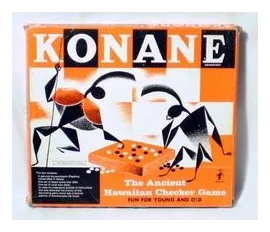
A traditional Hawaiian game. From Katie Harris's review: The gameboard is made up of rows and columns, like a checkerboard.
Core mechanisms
Key systems that shape the decisions players make.
Read the full game description
A traditional Hawaiian game. From Katie Harris's review: The gameboard is made up of rows and columns, like a checkerboard. However, you can have as many rows and columns as you would like (and your board accommodates). To set-up the game, fill each square with a playing piece, alternating between black and white pieces. Black moves first, by taking off one of his pieces. He may only remove a piece from the middle of the board or from one of the corners. White removes one of his pieces that is adjacent orthogonally to the empty square created by Black. There should now be two empty squares next to each other. From there on, players take turns jumping their opponents’ pieces. A jump may only be made orthogonally, never diagonally. A player may make multiple jumps with the same piece in a turn, provided that he does not change direction. Making a multiple jump is optional. Pieces that are jumped are removed from the board. When one player is unable to jump during his turn, his opponent wins the game. Online Play http://www.iggamecenter.com/ - igGameCenter (real-time, bot)