ABG All Board Games
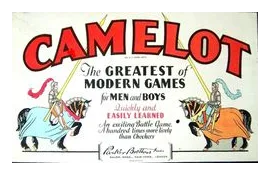
Camelot box art
Rich game profile

Camelot

Chivalry was first self-published by George S. Parker in 1888 and he called it his favorite game. In 1930 it was scaled down, re-named Camelot and published by Parker's company, Parker Brothers. Minor rules changes were implemented in 1931. The object is simple: move two pieces i...

Players

2

Time

?-?

Age

8+

Weight

2.4

Rating

6.83

Should this hit the table?

Quick read before the metadata.

Moderate level of interaction with a mix of direct confrontation and strategic depth.

Teach 2.3

Teaching signal

Replay 3.9

High replayability

Interaction 3.6

Highly interactive

Scaling 4.0

Scales well

Strategy 4.5

Deep strategy

Control 3.5

More strategic control

Table feel

Moderate level of interaction with a mix of direct confrontation and strategic depth.

Replay value

Camelot offers a high level of variability with its gameboard, allowing for different experiences each time it is played. The presence of expansions adds new content and gameplay elements, further enhancing replay value. The game also provides deep strategic possibilities and room for players to improve their tactics over time. The player interaction score is moderate, and the game scales well with different numbers of players. While it may take some time to learn, the easiness to learn score is still within a reasonable range. Overall, Camelot has a strong replayability score of 7.8 out of 10.

Luck profile

Camelot has a moderate level of luck involved in the game. Random elements such as dice rolls and card draws have a notable but not exclusive impact on the game outcome. However, players have substantial ability to mitigate the effects of luck through strategic decisions and planning. The game outcome is primarily determined by player strategy and decisions, with luck playing a minor role. Overall, Camelot strikes a good balance between luck and strategy.

Overview

What ABG knows about this game

Chivalry was first self-published by George S. Parker in 1888 and he called it his favorite game. In 1930 it was scaled down, re-named Camelot and published by Parker's company, Parker Brothers. Minor rules changes were implemented in 1931. The object is simple: move two pieces into your opponent's goal or eliminate all of your opponent's pieces. In a matter of minutes, you'll learn the moves. The Jump. The Capture. And the Power Play. The rest is up to you. Make your moves courageously or cautiously. But always be on guard. One move can quickly change the entire complexion of the game. Current World Camelot Federation rules of Camelot define one of the objects of the game as capturing ALL of the opponent's pieces while retaining two or more of your own.
Media

Images and visual references

Images, galleries, and videos are grouped here so the page feels visual before every asset is fully hosted.

Editions

Versions and regional releases

Edition Year Language Publisher / Region
No editions imported yet.

Files and documents

Rules, aids, translations

No files imported yet.

Credits

People and publishers

Designers

1
George S. Parker

Publishers

5
The Game Crafter, LLC John Waddington Ltd. Let's Play Games! LLC Parker Brothers Waddingtons

Linked items

Graph expansion queue

Related games and expansions help build a connected catalog around every title.