Overview
At a glance
Is this game right for my group?
ABG editorial scores on a 1–5 scale.
Harder to teach
High replayability
Highly interactive
Scales well
Deep strategy
How it plays
How does it play?
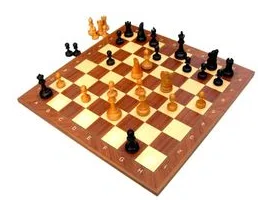
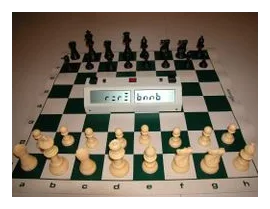
Like the standard game of chess, but the pieces behind the pawns on the white side are arranged at random, with the proviso that bishops must end up on opposite colors, and the king dwell somewhere between the two rooks. The black pieces are lined up to mirror the white.
Core mechanisms
Key systems that shape the decisions players make.
Grid Movement
Move pieces between adjacent spaces on a regular grid.
Pattern Movement
Pieces move according to defined geometric patterns.
Static Capture
Capture opposing pieces through fixed positional relationships.
Square Grid
Use an orthogonal grid where position and adjacent spaces shape movement or placement.
Read the full game description
Like the standard game of chess, but the pieces behind the pawns on the white side are arranged at random, with the proviso that bishops must end up on opposite colors, and the king dwell somewhere between the two rooks. The black pieces are lined up to mirror the white. This results in 960 different possible positions, hence the name Chess960. The game was proposed by Grand Master and former World Champion Bobby Fischer, to remove the need to memorize openings. He originally called Fischerandom, and later changed the name to Fischer Random Chess, which is also frequently used. The name Chess960 was invented by a FIDE committee and is now the official one.