Overview
At a glance
Is this game right for my group?
ABG editorial scores on a 1–5 scale.
Harder to teach
High replayability
Highly interactive
Scales well
Deep strategy
How it plays
How does it play?
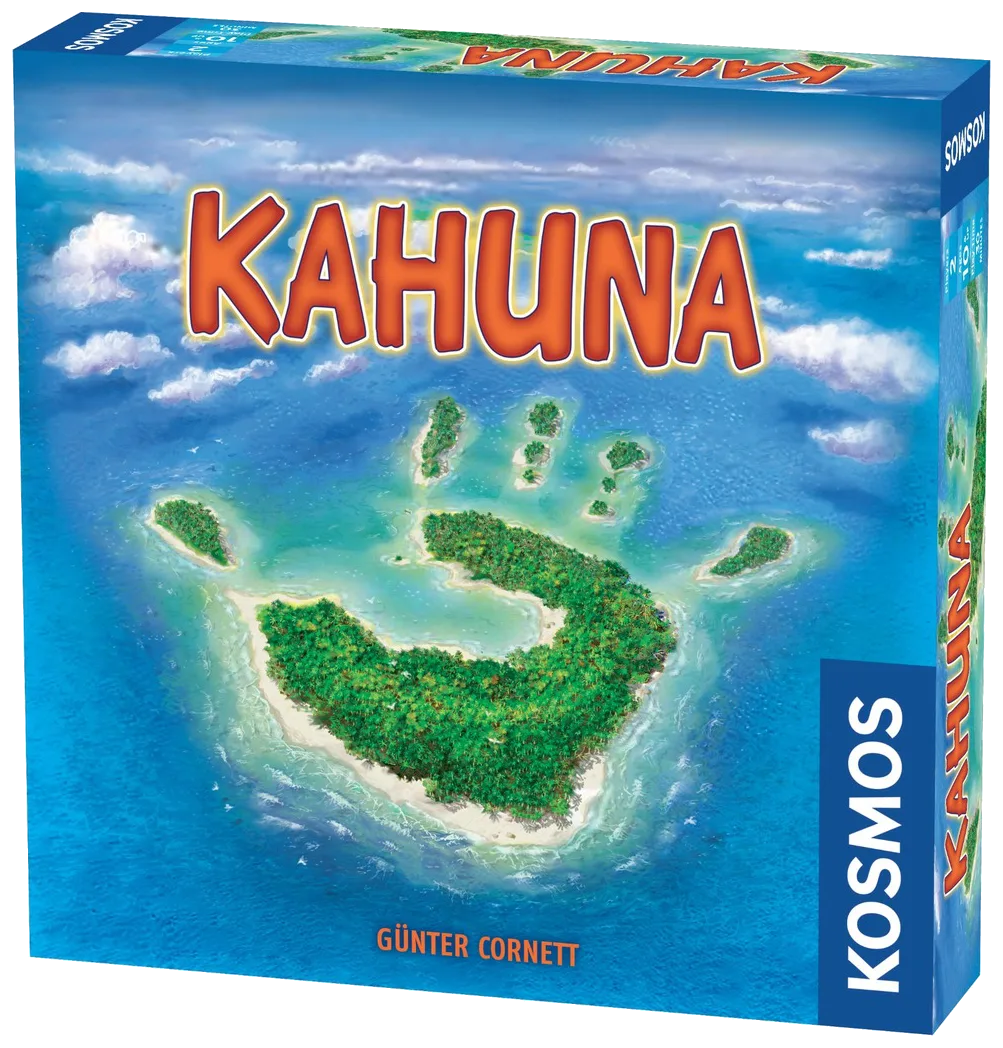
"Who will rule the South Seas? Two Kahuna - ancient sorcerers of the Pacific - compete for dominance on an archipelago consisting of twelve small islands.
Core mechanisms
Key systems that shape the decisions players make.
Area Majority
Compete to have the strongest presence in areas that award control or points.
Open Drafting
Select cards or items from a shared face-up display.
Hand Management
Time and sequence a limited hand of cards to preserve future options.
Network and Route Building
Create connected routes that improve reach, delivery, control, or scoring.
Take That
Direct negative effects at selected opponents.
Read the full game description
"Who will rule the South Seas? Two Kahuna - ancient sorcerers of the Pacific - compete for dominance on an archipelago consisting of twelve small islands. Using their magic and wisdom, they struggle for control of the islands. They anxiously await the cards handed to them by fate. But when the time is right, they move to capture one, two, or even more islands, trying to gain the upper hand. At the mercy of the magical powers of the South Seas, they quickly realize that even the best magic is no good without strategy." Originally published in 1997 as Arabana-Ikibiti by the designer's own publisher Bambus Spieleverlag, then reprinted by Funagain in the U.S., Kosmos' Kahuna – part of its Kosmos two-player series – is the best known implementation of this design. It's a two-player game, played on a board depicting twelve islands. Players use cards to place bridges between these islands or remove opponent's bridges. If you get the majority of bridges around an island, you place one of your marker stones on it and also remove any of your opponent's bridges to that island – which might cause them to lose a bridge majority on an adjacent island and lose a marker stone there. The game is played in three rounds. A round ends when all cards from the face down deck and the three face up cards have been taken. Then points are scored for the islands with a marker stone on them. The game can also end sooner when one player has absolutely NO bridges left on the board. The Kosmos edition has excellent graphics and nice wooden pieces and plays very well. Reimplements: Arabana-Ikibiti Reimplemented by: Kanaloa