Overview
At a glance
Is this game right for my group?
ABG editorial scores on a 1–5 scale.
Harder to teach
High replayability
Highly interactive
Scales well
Deep strategy
How it plays
How does it play?
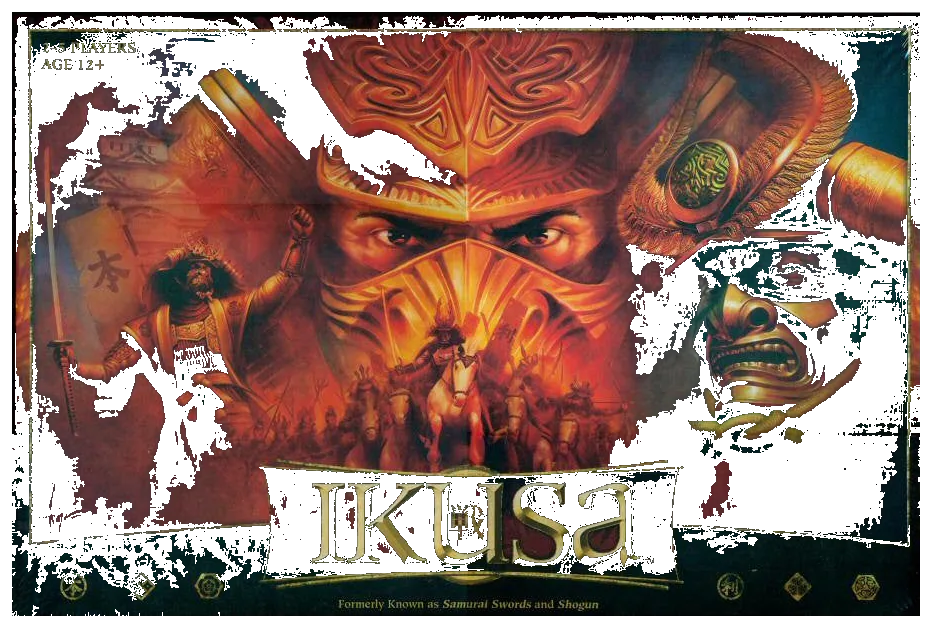
Shogun / Samurai Swords is the last game in the original Milton Bradley Gamemaster series. It was later rereleased by HAH under the name Ikusa.
Core mechanisms
Key systems that shape the decisions players make.
Area Majority
Compete to have the strongest presence in areas that award control or points.
Area Movement
Move pieces between connected regions rather than along individual spaces.
Auction/Bidding
Bid against other players to determine who receives an item, action, or priority.
Dice Rolling
Roll dice to introduce uncertainty into actions, production, movement, or resolution.
Simultaneous Action Selection
Choose actions secretly or concurrently before revealing them together.
Read the full game description
Shogun / Samurai Swords is the last game in the original Milton Bradley Gamemaster series. It was later rereleased by HAH under the name Ikusa. The game focuses on the chaotic feudal society of Japan during the Middle Ages. Players play one of several factions that erupt into a civil war, trying to consolidate their strongholds and then defeat other armies for the right to be called Shogun, the supreme ruler. In the game, players command forces on islands of feudal Japan. Player forces include provincial forces in the provinces and mobile armies commanded by daimyos. In each turn, players will allocate their koku into bids and purchases for the round. The round begins with the allocation of turn order, which is determined by bid, and in the case of tied bids, by player agreement or random draw. Then players other bids and payments are accounted for in purchases of castles and fortresses, drafting of new troops and ronin, and a bid for the lone ninja. Following the bids phase, players in turn order plan and execute attacks against enemy territories, with attacks resolved through die rolls. A player wins the game when he or she has captured a certain number of territories, either via straight conquest or by vanquishing the last of an opponent's diamyos and taking over that player's forces. The game was originally published as Shogun and was later changed to Samurai Swords due to a name conflict with James Clavell's Shogun. Ikusa is the latest iteration of the game.