Overview
At a glance
Is this game right for my group?
ABG editorial scores on a 1–5 scale.
Harder to teach
High replayability
Highly interactive
Scales well
Deep strategy
How it plays
How does it play?
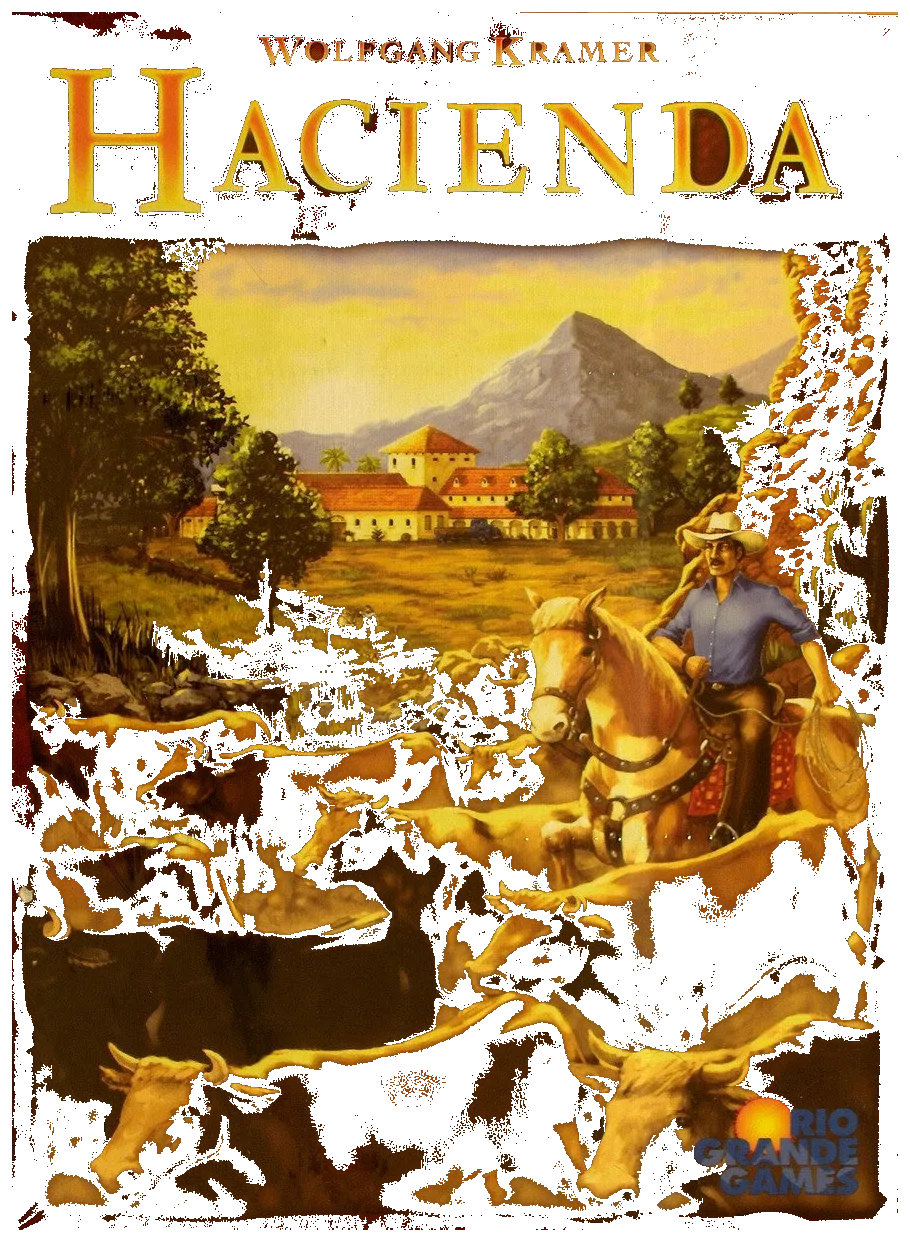
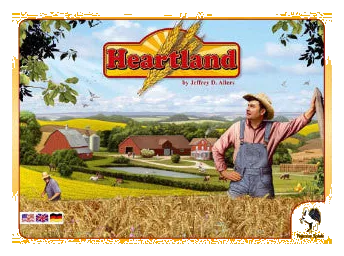
West of the Mississippi, the grasslands of Middle America contain some of the richest farm land in the world, producing corn, soybeans, wheat, hay, and livestock.
Core mechanisms
Key systems that shape the decisions players make.
Enclosure
Surround spaces or pieces to claim territory, capture, or score.
Hand Management
Time and sequence a limited hand of cards to preserve future options.
Pattern Building
Place elements to create arrangements that satisfy scoring or action patterns.
Tile Placement
Place tiles to build a shared or personal spatial arrangement.
Layering
Place components over earlier pieces so their order and overlap affect play.
Square Grid
Use an orthogonal grid where position and adjacent spaces shape movement or placement.
Read the full game description
West of the Mississippi, the grasslands of Middle America contain some of the richest farm land in the world, producing corn, soybeans, wheat, hay, and livestock. Purchased from France as part of the Louisiana Territory in 1803, the region was divided into square mile plots for the settlers from the east. In this game, players take the role of these settlers, developing the plots of land and establishing farms in America’s “Heartland.” The game, entitled “Eine Frage der Ähre” in German, is a three-dimensional tile-laying game. Each tile contains two types of crops to be planted as well as a certain number of “barnyard points.” When placing tiles, players must always choose between scoring immediate “harvest” (victory) points or developing their farms through the barnyard points, which will provide victory points over the longer term. In addition, there is a race to the top of each barnyard point track in order to acquire the most valuable animals for the farm. Players may also “rotate crops” by using their tiles to cover up fields that bring their opponent’s points, possibly expanding their own farms in the process. This translates into an hour-long game aimed at families and gamers with multiple paths to victory. Source: Jeffrey D. Allers