Overview
At a glance
Is this game right for my group?
ABG editorial scores on a 1–5 scale.
Harder to teach
High replayability
Highly interactive
Scales well
Deep strategy
How it plays
How does it play?
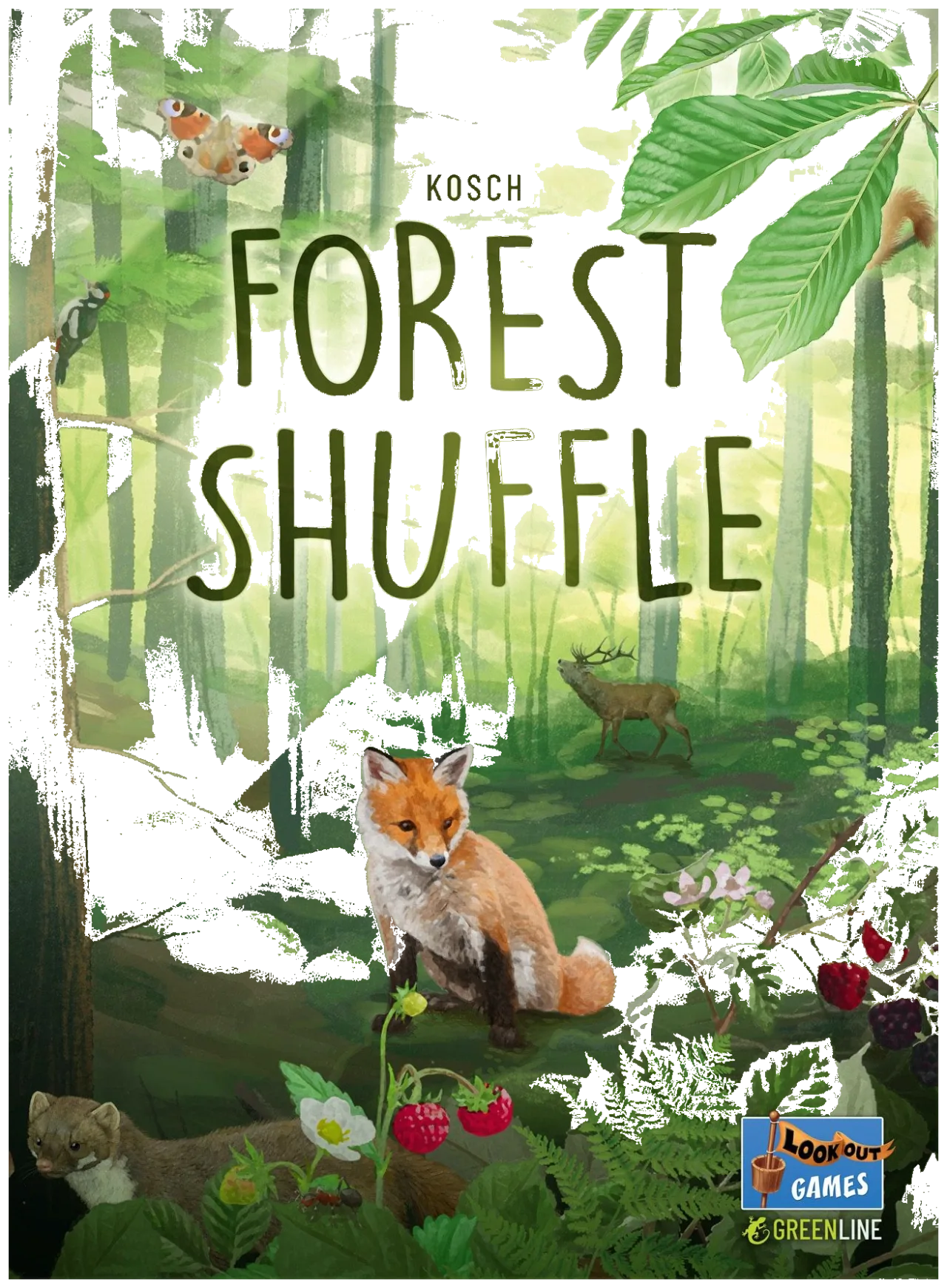
In Forest Shuffle, players compete to gather the most valuable trees, then attract species to these trees, thus creating an ecologically balanced habitat for flora and fauna.
Core mechanisms
Key systems that shape the decisions players make.
Chaining
Link actions or effects so one result enables the next part of a sequence.
Hand Management
Time and sequence a limited hand of cards to preserve future options.
Multi-Use Cards
Use the same card in different ways, making each play a trade-off.
End Game Bonuses
Earn additional points for meeting conditions evaluated when the game ends.
Layering
Place components over earlier pieces so their order and overlap affect play.
Read the full game description
In Forest Shuffle, players compete to gather the most valuable trees, then attract species to these trees, thus creating an ecologically balanced habitat for flora and fauna. To start, each player has six cards in hand, with cards depicting either a particular type of tree or two forest dwellers (animal, plant, mushroom, etc.), with these latter cards being divided in half, whether vertically or horizontally, with one dweller in each card half. On a turn, either draw two cards — whether face down from the deck or face up from the clearing — and add them to your hand, or play a card from your hand by paying the cost, then putting it into play. During set-up, three winter cards were placed into the bottom third of the deck. When the third winter card is drawn, the game ends immediately, then players tally their points based on the trees and dwellers in their forest. Whoever scores the most points wins. Forest Shuffle is the first in a line of Lookout games sporting the Lookout Greenline label, produced on FSC certified paper and avoiding plastic completely.