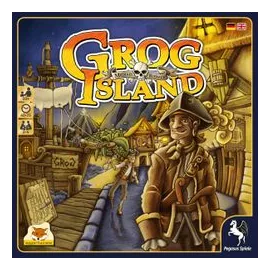
Overview
At a glance
Is this game right for my group?
ABG editorial scores on a 1–5 scale.
Harder to teach
High replayability
Highly interactive
Scales well
Deep strategy
How it plays
How does it play?
Even for the mightiest pirates there comes a time when they must retire from their lives of invading and plunder — but what's coming afterward?
Core mechanisms
Key systems that shape the decisions players make.
Auction/Bidding
Bid against other players to determine who receives an item, action, or priority.
Set Collection
Gather related items that become more valuable when scored together.
Dice Rolling
Roll dice to introduce uncertainty into actions, production, movement, or resolution.
Trading
Exchange resources, assets, or promises with other players.
Read the full game description
Even for the mightiest pirates there comes a time when they must retire from their lives of invading and plunder — but what's coming afterward? Well, on the five peninsulas of Grog Island, they can invest their loot in rock-solid businesses, such as peg-leg shops, carpentries for figureheads, workshops for voodoo dolls, or the infamous "Grog Hole" pub. The core of Grog Island is its unique auction mechanism, which uses five colored dice. The players use these dice and the pips on them to create and raise bids. While the winner of an auction can claim buildings on certain peninsulas, the players who have passed are also rewarded: Not only do they receive goods like grog bottles or treasure maps but they also visit merchant ships where they can trade these goods for money, parrots or treasure chests. The auction mechanism of Grog Island makes for tactical and interesting gameplay as in certain moments, passing can be almost as rewarding as winning an auction. Finding the right balance between bidding and backing out is the key to winning. The game ends as soon as one player has claimed a certain number of buildings, then all players score the secret goal cards they received both at the start of and during the game. These cards may give points for majorities on peninsulas as well as for claiming certain types of buildings or collecting certain goods. The player with the most points wins.