Overview
At a glance
Is this game right for my group?
ABG editorial scores on a 1–5 scale.
Harder to teach
High replayability
Highly interactive
Scales well
Deep strategy
How it plays
How does it play?
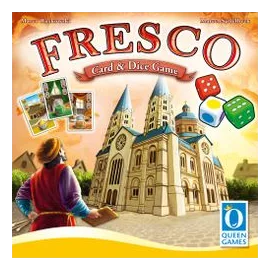
Fresco: The Card Game takes the core game play of Fresco and distills it into a smaller, faster playing design. The Bishop has specific wishes when it comes to the new fresco that should brighten up the cathedral.
Core mechanisms
Key systems that shape the decisions players make.
Read the full game description
Fresco: The Card Game takes the core game play of Fresco and distills it into a smaller, faster playing design. The Bishop has specific wishes when it comes to the new fresco that should brighten up the cathedral. He has very particular instructions about what should be painted in specific places. Players will take on the role of painters attempting to paint the new fresco according to his instruction, receiving points in the game for painting the Fresco and bonus points for fulfilling the Bishops' requests. During the game players draw color cards which they will use to paint sections of the fresco. Color cards can be gained from the market, which holds the three basic colors, or from the workshop, which contains the mixed color palette. When players have enough colors they can paint a section of the fresco and gain points. Play the right combination of cards, and you will extra points. When all sections of the fresco are painted, players total up their points and who has the most points is the winner of the game. Fresco - The Dice Game Roll and combine the right combination of dice to gain fresco tiles and be the first to complete your fresco! The goal of the game is to complete the five different tiles to form a complete fresco. In order to complete a fresco tile players have to roll a result that matches the number next to each fresco tile. On their turn, players roll the dice exactly three times, on each roll setting one die aside. After the three rolls, the pips on the three set aside dice are added together, which allows the player to collect the corresponding tile. If the result does not match a fresco tile number, they gain a portrait token which will grant bonuses or points. The two color dice can be used to double the number on the corresponding colored die, making it easier to reach the higher numbers. Before a turn players can place the bishop on one of the five fresco tile spaces, earning extra points if they manage to roll that exact number. Other players can bet on whether the player is successful or not, and will earn some extra points if they guess correctly. At the end of the game, players count the points on their fresco and portrait tiles, and whomever has the most points is the winner of the game.