Overview
At a glance
Is this game right for my group?
ABG editorial scores on a 1–5 scale.
Harder to teach
High replayability
Highly interactive
Scales well
Deep strategy
How it plays
How does it play?
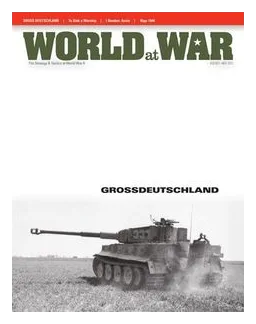
Famous Divisions: Grossdeutschland Panzer, is the first in a new evolution in design that brings tactical elements to an otherwise operational simulation.
Core mechanisms
Key systems that shape the decisions players make.
Read the full game description
Famous Divisions: Grossdeutschland Panzer, is the first in a new evolution in design that brings tactical elements to an otherwise operational simulation. Recreating four battles of the Grossdeutschland Panzer from the eastern front in 1943 and 1944, this first game of the series includes: Lutchessa Valley, Kursk, Akhtyrka and Mischurin Rog (each played on its own detailed and historically accurate map). The Famous Divisions Series offers a new concept: play is governed by the drawing of "Event Chits" during combat. Combat is not simply resolved by comparing the attack strengths and defense strengths of units as effected by terrain; rather, it's modified by random chit draws of over 140 possible "events" that introduce the elements of chaos and unpredictability to combat resolution. Event Chits can be nullified by other Event Chits; so players never know how an attack may be resolved based solely on odds ratios and terrain. The number of chits a given side may hold and draw also serves as an easy measure of its elite (or non-elite) status. Each hex represents approximately 500 meters from side to opposite side. Each game turn represents approximately six hours; however, the game turns aren't divided into separate friendly and enemy player turns. Rather, each is made up of numerous individual HQ activations. All HQ activation chits are placed in a cup, and each is drawn one at a time to initiate the activation (movement and combat) of a particular headquarters and its associated companies. When that HQ’s activation is finished, a new HQ is drawn from the cup, and then its activation begins. Combat units are individual companies featuring distinct vehicles and weapons, which are shown as icons along with the numeric representations of the capabilities of the vehicle or weapon portrayed. Play is therefore tactical in many respects: units have individual range values, different movement capabilities depending on type (wheeled, tracked or leg), and rules cover such things as demolishing bridges, pontoon bridges, weather, overrun, supply, infantry riding tanks, direct and ranged fire, artillery barrages, opportunity fire, night, fortifications (bunkers, trenches, mines, dragon’s teeth), engineers, armor recovery vehicles, airpower and anti-aircraft artillery. While not a purpose-designed solitaire system, the chit mechanisms make the series easily adaptable to such play, since the player won't know what chits may be drawn that could alter combat, or in what order the HQ activations will take place. Some examples of the 140 Event Chits are: Sniper, Good Commander, Ambush, Experienced NCO, Caught in Crossfire, Fanatic, Radio Out, Critical Hit, Frontal Assault, Elite Troops, Outflanked, Hand-to-Hand Combat, and Friendly Fire. Published in World at War magazine #20, Oct-Nov 2011. Game Scale: Game Turn: 6 hours Hex: 550 yards / 503 meters Units: companies Game Inventory: Two 22 x 34" full color mapsheets Two dual-side printed countersheets (560 1/2" counters) One 32-page Gross Deutschland Panzer rulebook Solitaire Playability: Medium Complexity Level: Medium Players: 2 or more Playing Time: 3-20