Overview
At a glance
Is this game right for my group?
ABG editorial scores on a 1–5 scale.
Harder to teach
High replayability
Highly interactive
Scales well
Deep strategy
How it plays
How does it play?
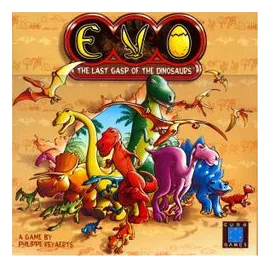
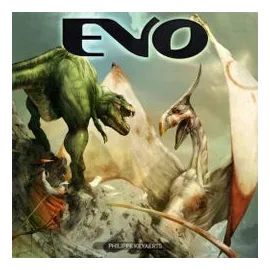
In Evo, you play a nomadic people in symbiosis with a primitive reptilian species.
Core mechanisms
Key systems that shape the decisions players make.
Auction/Bidding
Bid against other players to determine who receives an item, action, or priority.
Area Movement
Move pieces between connected regions rather than along individual spaces.
Variable Player Powers
Each player has different abilities, restrictions, or strategic advantages.
Spendable Victory Points
Spend or risk victory points during play instead of treating them only as final score.
Read the full game description
In Evo, you play a nomadic people in symbiosis with a primitive reptilian species. You travel the wild open spaces of Kumgath with your mounts, you will use your knowledge of biology to help them adapt and succeed against both the hostile and changing climate and other competing species. Players will earn mutation points during the course of the game. The player with the most at the end of the game is the winner. Changes in this edition: Initiative is based on bidding position for the mutation/adaptation genes, and tails have been done away. Climate change is based on a token draw instead of a die roll. The combat die is no longer a regular D6 but has symbols which serves approximately the same odds as before. There is a 1-in-6 chance for a stalemate otherwise, depending on the difference in horns, the defender will have a dinosaur removed from the board The attackers dinosaur can never die. Evolution occurs after climate change instead of later in the turn. There are 12 climate tokens, delineating strictly 9 to 11 turns, with the game-ending meteor event occurring in one of the last three climate tokens. Players only have a maximum 8 dinosaurs, while the older game had a maximum of 10. There are 12 new "special" genes, 8 of which are mixed in with the regular genes. Each have a unique power/ability such as flying, amphibious movement, chameleon capability for defense, or the ability to predict the future climate. One event card is available each turn during bidding with the number of players minus one genes pulled out of the bag. Winning the event card will give the player first initiative and is only modified by number of dinosaurs on the board.