Overview
At a glance
Is this game right for my group?
ABG editorial scores on a 1–5 scale.
Harder to teach
High replayability
Highly interactive
Scales well
Deep strategy
How it plays
How does it play?
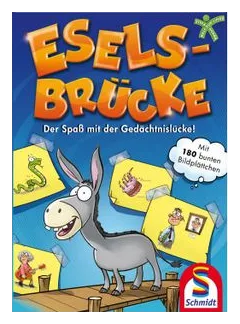
The name "Eselsbrücke" literally means "donkey bridge" – as depicted on the cover of the game Eselsbrücke, for example – but the term also refers to a mnemonic, something used to retain a memory, and that's the goal at the heart of this design from Stefan Dorra and Ralf zur Linde. In this game, players must take randomly drawn symbols and objects and create stories from them, ideally memorable and fun stories that will enable other players to recall the objects around which the stories are centered.
Core mechanisms
Key systems that shape the decisions players make.
Read the full game description
The name "Eselsbrücke" literally means "donkey bridge" – as depicted on the cover of the game Eselsbrücke, for example – but the term also refers to a mnemonic, something used to retain a memory, and that's the goal at the heart of this design from Stefan Dorra and Ralf zur Linde. In this game, players must take randomly drawn symbols and objects and create stories from them, ideally memorable and fun stories that will enable other players to recall the objects around which the stories are centered. Whoever builds the best mnemonics – and listens well to the stories told by others – has the best chance of winning the game.