Overview
At a glance
Is this game right for my group?
ABG editorial scores on a 1–5 scale.
Harder to teach
High replayability
Highly interactive
Scales well
Deep strategy
How it plays
How does it play?
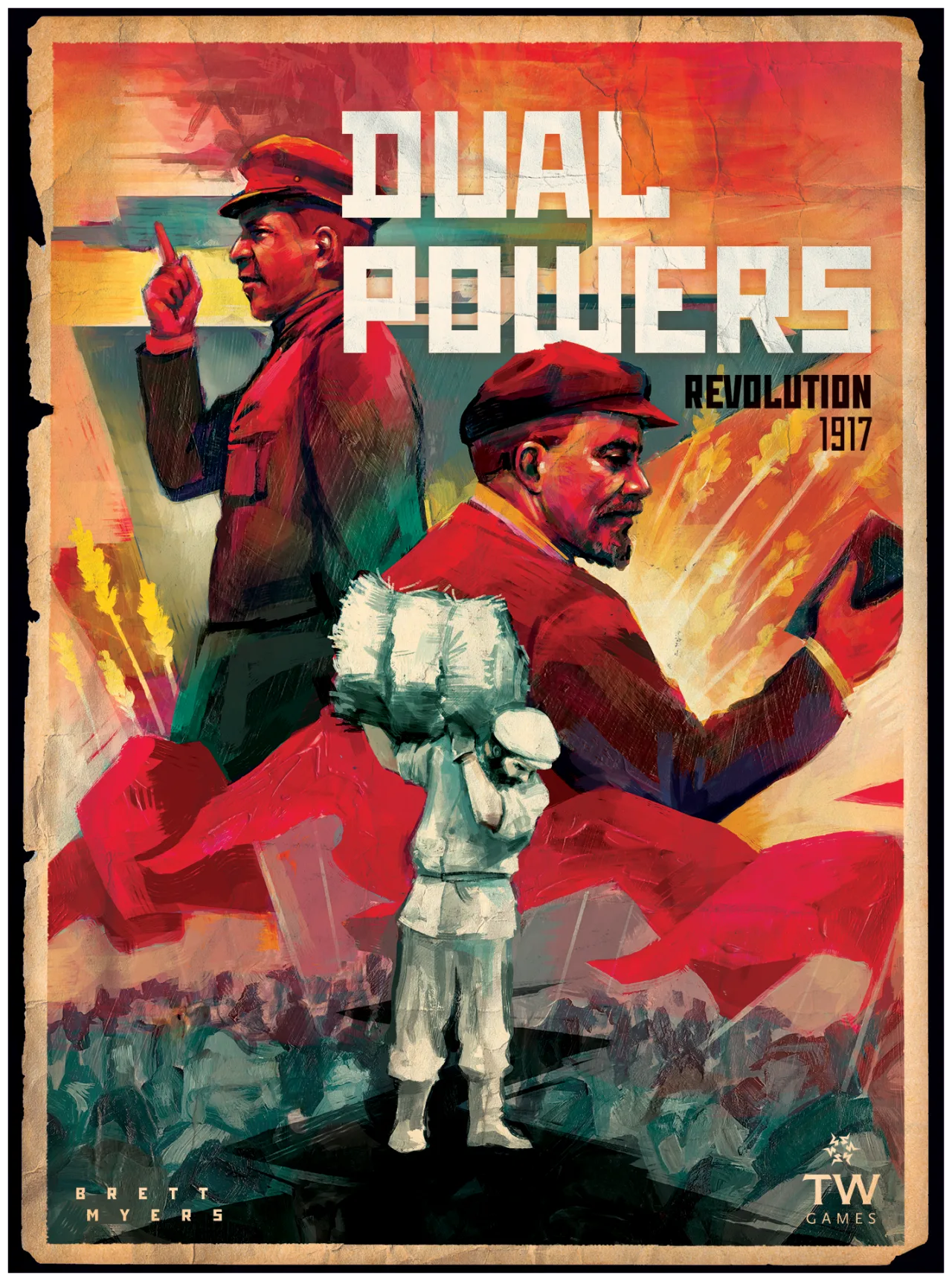
In March of 1917, Tsar Nicholas II was forced to abdicate the throne of Russia. In his place, a conservative Provisional Government formed, representing the official authority of the state.
Core mechanisms
Key systems that shape the decisions players make.
Area Majority
Compete to have the strongest presence in areas that award control or points.
Campaign Card Play
Play cards to command conflicts and carry consequences through a campaign.
Hand Management
Time and sequence a limited hand of cards to preserve future options.
Command Cards
Use cards to issue orders and determine which units or actions can activate.
Tug of War
Competing actions pull a shared marker or advantage back and forth.
Solo / Solitaire Game
Provide rules and objectives designed for a single player.
Read the full game description
In March of 1917, Tsar Nicholas II was forced to abdicate the throne of Russia. In his place, a conservative Provisional Government formed, representing the official authority of the state. Opposed to the newly formed government stood the Petrograd Soviet, an elected council of workers organized by socialist activists. Over the following months, an internal struggle for power and influence would dominate the country and spark a social revolution. In this state of dual power, or dvoevlastie, charismatic and powerful leaders would rise with the tide of public dissatisfaction and change the course of Russian politics forever. In Dual Powers, 1-2 players direct the forces on one side of this struggle through political action, social maneuvering, and military conflict. The player with greater support at the end of the game will shape Russia’s future and either launch or suppress the impending Civil War. —description from the publisher