Overview
At a glance
Is this game right for my group?
ABG editorial scores on a 1–5 scale.
Harder to teach
High replayability
Highly interactive
Scales well
Deep strategy
How it plays
How does it play?
Wonderful Naval tactics game of skill.
Core mechanisms
Key systems that shape the decisions players make.
Grid Movement
Move pieces between adjacent spaces on a regular grid.
Memory
Remember previously revealed information, positions, or sequences.
Secret Unit Deployment
Place or assign units secretly before their positions are revealed.
Square Grid
Use an orthogonal grid where position and adjacent spaces shape movement or placement.
Read the full game description
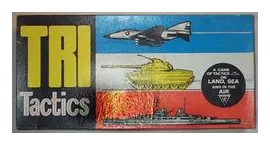
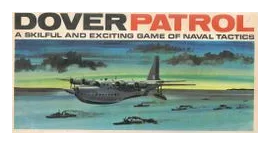
Wonderful Naval tactics game of skill. This game DOVER PATROL along with L'Attaque and Aviation: The Aerial Tactics Game of Attack and Defence were each designed by Harry Gibson along with a more complicated incorporation of all three, a game called Tri-Tactics Note: L'Attaque was patented in 1909 in France by a woman with a French name. Whether Harry Gibson designed that game is therefore open to some doubt. Stratego is very much like L'Attaque, published after World War II when the patent would have expired. The board, which supposedly represents an area of sea, is superimposed with a rectangular grid. A Base is shown on two of the opposite edges of the board. The area round each base is protected by a harbour wall. Each player has a fleet of forty playing pieces. These pieces are rectangles of cardboard which stand upon plastic supports. The two sides are distinguished by the colour on the back of each card, red and blue in this case. The fronts of the cards depict various ships, mines and a flying boat. Each piece has a printed value from 1 for a Patrol Vessel to 10 for the Flagship. These values represent the relative strength of each ship and also indicate the type of ship; battle cruisers, light cruisers, etc.. The ships are also named, H.M.S. Lion, H.M.S. Glasgow and so on. The object of the game is to capture the enemy Flag and transport it back to one's own base while still retaining possession of one's own Flag. To start the game, the players place their Flag on their Base and then set up their pieces, one per rectangle, on their own side of the board and with the backs of the cards facing the opponent. In turn the players move a piece one space orthogonally until two opposing pieces are back-to-back. The moving player may then call 'Attack', the two relevant pieces are then revealed and the one with the lower value is sunk and removed from the board. In addition to the fighting ships, the players have a number of auxiliary pieces. Mines will automatically blow up virtually all ships that are moved into an attacking position, regardless of whether the owner of the moving ship attacks or not. Once placed, mines may not be moved. Only the mine sweepers can destroy mines. The mine layers act as floating mines. They can be moved but may not attack, but have the same effect upon enemy shipping as a mine. Only the destroyers can sink them. Submarines have a marauding role and can sink all ships except mine layers and MTB's. The good old flying boat has a very important role as it is principally used to capture the enemy flag because it can fly over the harbour walls. Only MTB's and destroyers can shoot it down. When the opposing flag is captured, it is clipped to the top of the capturing piece and thus its whereabouts are known to all. The Flag can be transferred to any other piece standing orthogonally adjacent to the piece which is transporting it. It is a fairly straightforward game to play, though tactics can well be employed, particularly in the setting up phase.