Overview
At a glance
Is this game right for my group?
ABG editorial scores on a 1–5 scale.
Harder to teach
High replayability
Highly interactive
Scales well
Deep strategy
How it plays
How does it play?
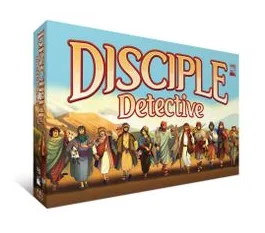
Disciple Detective is a deduction game for 2-5 players. Each player begins with a handful of Disciples that only the other players can see.
Core mechanisms
Key systems that shape the decisions players make.
Read the full game description
Disciple Detective is a deduction game for 2-5 players. Each player begins with a handful of Disciples that only the other players can see. Individuals must use their deduction skills and intuition to determine what Disciples they have. Players may take notes on the back of their cards with a dry erase marker to help determine which disciples are in their hands. The cooperative version of Disciple Detective has the group trying to deduce all of the Disciples in the deck before running out of Clue Tokens. At the start of a player's turn, the player must decide which of these three actions to take: 1. Give a Trait Clue 2. Order Players’ Hands 3. Guess a Disciple When giving a Trait Clue, the player looks at the other player's hand, selects a Trait such as which disciples have a known origin, and then touches each card having that trait. For ordering other players' hands, the player orders each other player's hand by selecting the cards in chronological order. To guess a disciple the player raises one of their cards and tells the other players what disciple is in hand. If correct, they discard the disciple and draw a new one. Some disciples have quirks, special rules that must be followed when giving clues, and these Quirks will make it more difficult to deduce the disciples in a player's hand. For example, James and John always want to be first and second when ordered. Peter, on the other hand, will run to the end of the line when ordered. Judas will just lie about his traits. Bartholomew will remove the quirks from the other disciples in a player's hand, but that is actually not that helpful. A Clue Token is used up every time an action is used, unless a player correctly guesses one of their disciples in which case the player may either take a free action or take back a Clue Token. If at any time the team runs out of Clue Tokens, the players all lose. In addition to the cooperative version of Disciple Detective, there is also a competitive version where each player has their own group of Disciples to deduce before the other players deduce their own. Players actions are similar to the cooperative version except clues are received instead of given. The first player to deduce their starting group of disciples wins! —description from the publisher