Overview
At a glance
Is this game right for my group?
ABG editorial scores on a 1–5 scale.
Harder to teach
High replayability
Highly interactive
Scales well
Deep strategy
More strategic control
How it plays
How does it play?
Explore a shifting island, queue cooperative attacks, die, unlock permanent upgrades, and begin a stronger run toward the Hand of the King.
Core mechanisms
Key systems that shape the decisions players make.
Cooperative Game
Players coordinate their actions toward a shared objective and win or lose together.
Deck / Bag Building
Add new pieces during play to improve the cards, tokens, or dice drawn later.
Action Queue
Place actions into an ordered queue that resolves now or on later turns.
Communication Limits
Rules restrict what players may say, show, or reveal while cooperating.
Delayed Purchase
Commit to a purchase before receiving the item or paying its full cost.
Read the full game description
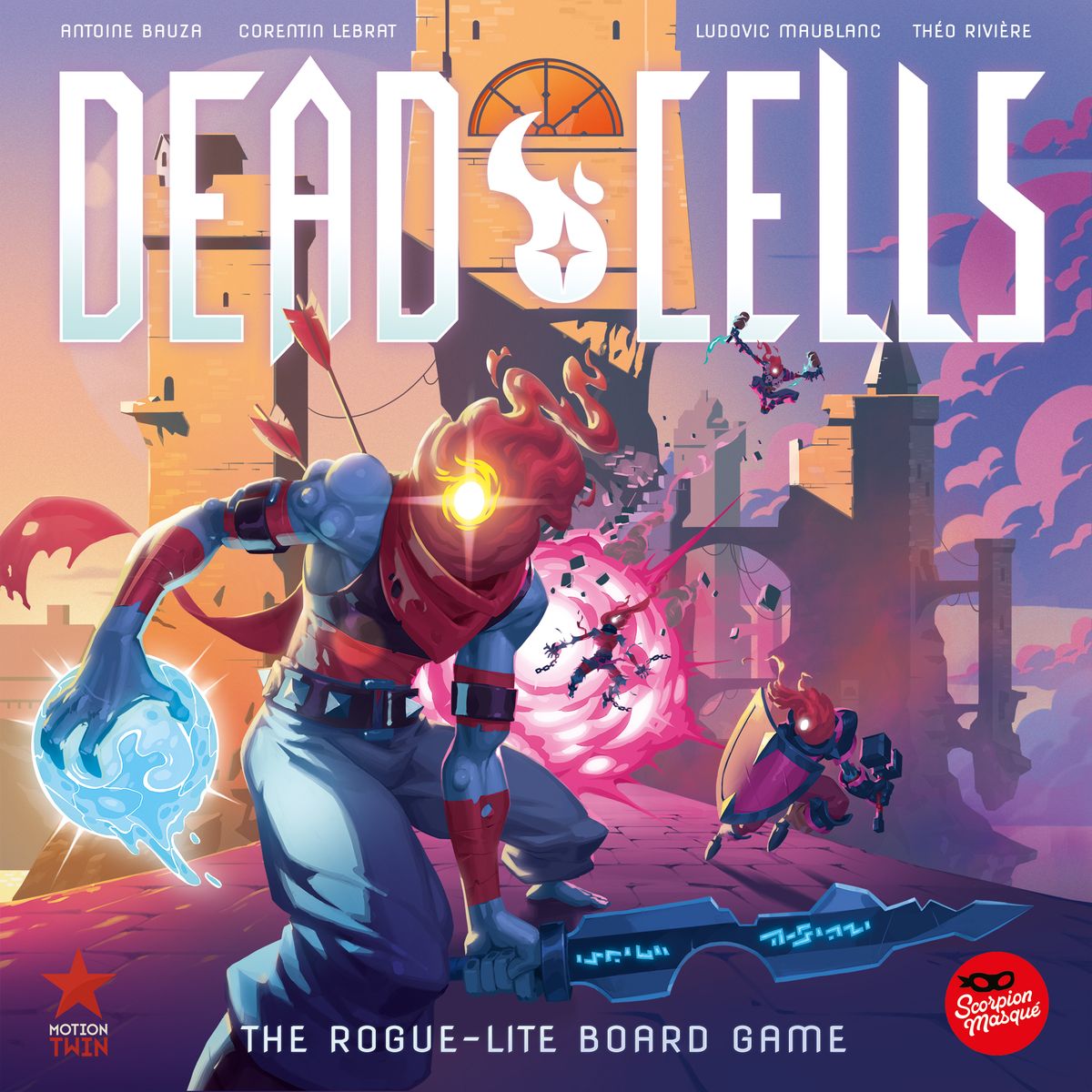
Dead Cells: The Rogue-Lite Board Game turns the video game’s cycle of exploration, death, and permanent improvement into a cooperative campaign for one to four players. A run begins in the Prisoners’ Quarters with each player controlling a different Beheaded. The group chooses paths through face-down biome tiles, revealing enemies, loot, merchants, checks, and branching routes. Combat is resolved through a shared enemy line and an action queue. Players choose combat cards together, but communication restrictions force the team to read one another’s intentions instead of optimizing every decision in public. Cards define initiative, attacks, blocks, and character abilities; equipment, companions, status effects, and upgrades widen the possible combinations. Surviving a biome opens markets and new routes, while bosses demand a coordinated sequence of attacks against escalating patterns. Death is expected. A failed run sends the group back to the beginning, but collected Cells purchase permanent upgrades, blueprints add equipment to future decks, runes unlock paths, and the Mutation board records long-term growth. The next island is therefore both familiar and materially different. Organized biome decks and dedicated storage preserve that evolving campaign between sessions, and the entire progression can be reset without destroying components. A solo board and solo combat cards adapt the cooperative timing puzzle for one Beheaded.