Overview
At a glance
Is this game right for my group?
ABG editorial scores on a 1–5 scale.
Harder to teach
High replayability
Highly interactive
Scales well
Deep strategy
How it plays
How does it play?
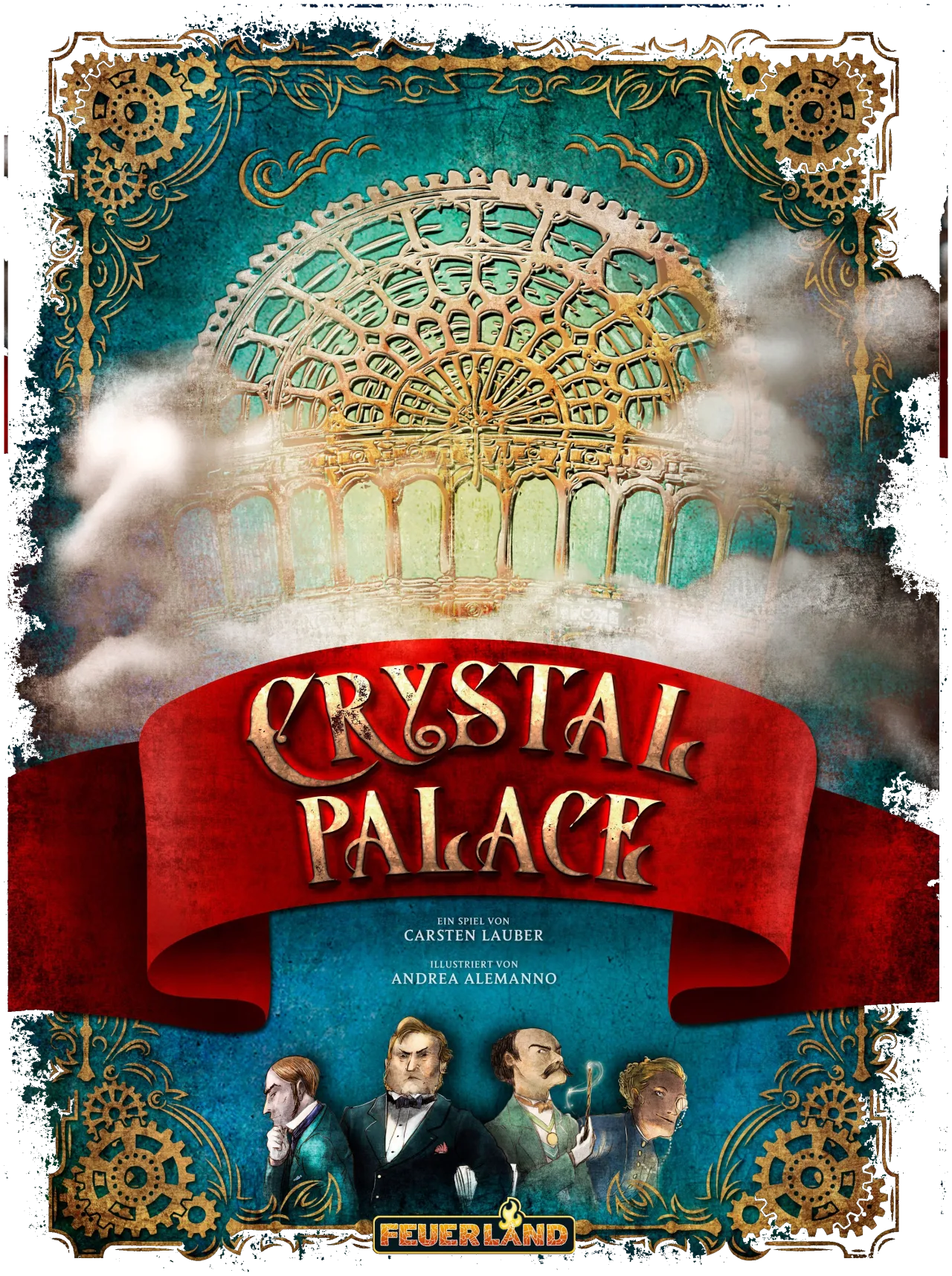
In Crystal Palace, players take on the role of a nation at the time of the first World Fair in London (1851), trying to create a buzz with spectacular inventions and the support of famous and powerful people.
Core mechanisms
Key systems that shape the decisions players make.
Income
Receive recurring resources according to your position, assets, or development.
Set Collection
Gather related items that become more valuable when scored together.
Modular Board
Build the play area from interchangeable sections that vary between games.
End Game Bonuses
Earn additional points for meeting conditions evaluated when the game ends.
Loans
Borrow resources now and repay them later, usually with an additional cost.
Read the full game description
In Crystal Palace, players take on the role of a nation at the time of the first World Fair in London (1851), trying to create a buzz with spectacular inventions and the support of famous and powerful people. Crystal Palace is a dice-placement game in which the players themselves determine the stats of their dice at the beginning of each round. The higher the number, the better — but it comes at a price. In the course of the game, dice are placed on eight action locations (Patent Office, Reform Club, London Times, Port of London, Waterloo Station, British Museum, Bank of England, Westminster) in a competition for the best resources, patents, and brains. In a world of slightly weird inventions, you will meet people like Phileas Fogg, Levi Strauss and Amelia Edwards, and invent gadgets such as the Thinking machine, the Beer glass counter or the Climate changer. —description from the publisher