Overview
At a glance
Is this game right for my group?
ABG editorial scores on a 1–5 scale.
Harder to teach
High replayability
Highly interactive
Scales well
Deep strategy
How it plays
How does it play?
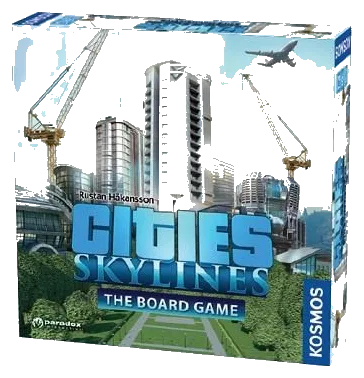
Cities: Skylines – The Board Game is a co-operative game based on the popular computer game of the same name by Paradox Interactive. Gameplay starts with four land boards being visible, the exact number varying depending on the scenario.
Core mechanisms
Key systems that shape the decisions players make.
Modular Board
Build the play area from interchangeable sections that vary between games.
Variable Player Powers
Each player has different abilities, restrictions, or strategic advantages.
Cooperative Game
Players coordinate their actions toward a shared objective and win or lose together.
Hand Management
Time and sequence a limited hand of cards to preserve future options.
Tile Placement
Place tiles to build a shared or personal spatial arrangement.
Read the full game description
Cities: Skylines – The Board Game is a co-operative game based on the popular computer game of the same name by Paradox Interactive. Gameplay starts with four land boards being visible, the exact number varying depending on the scenario. The goal is to finish a number of milestones and to make the inhabitants of your city happy. At the start of each milestone, one additional board is bought, flipped over from its nature side to its developed side. Players have personal cards that show what they can build, and ideally they discuss and plan with the other players how to best develop the city. The cards show what effects the building will have on the city, for example increasing the need for garbage collection, decreasing crime, or giving a bonus if placed next to a park. Cardboard tiles represent residential, commercial, industrial, and other buildings, and they have varied base shapes that are placed on the developed boards on the grid. When the players have developed the city to the next milestone, they choose which new board to buy to expand the city, score their current happiness, and start a new milestone. When the last milestone is finished, the game ends, then the total happiness score is summed. There is only one city treasury, and all players add to it when they make money for the city and take money from it for building a hospital or buying a new board. Making sure you have enough money is an important aspect of the game for if you run out of money, you go bankrupt and lose. A series of scenarios teach the game in steps, with each new step introducing new parts of the game. The full game with News, Unique buildings, Policies and Roles vary greatly from game to game, as players are provided with new challenges by the emergent behavior of the city.